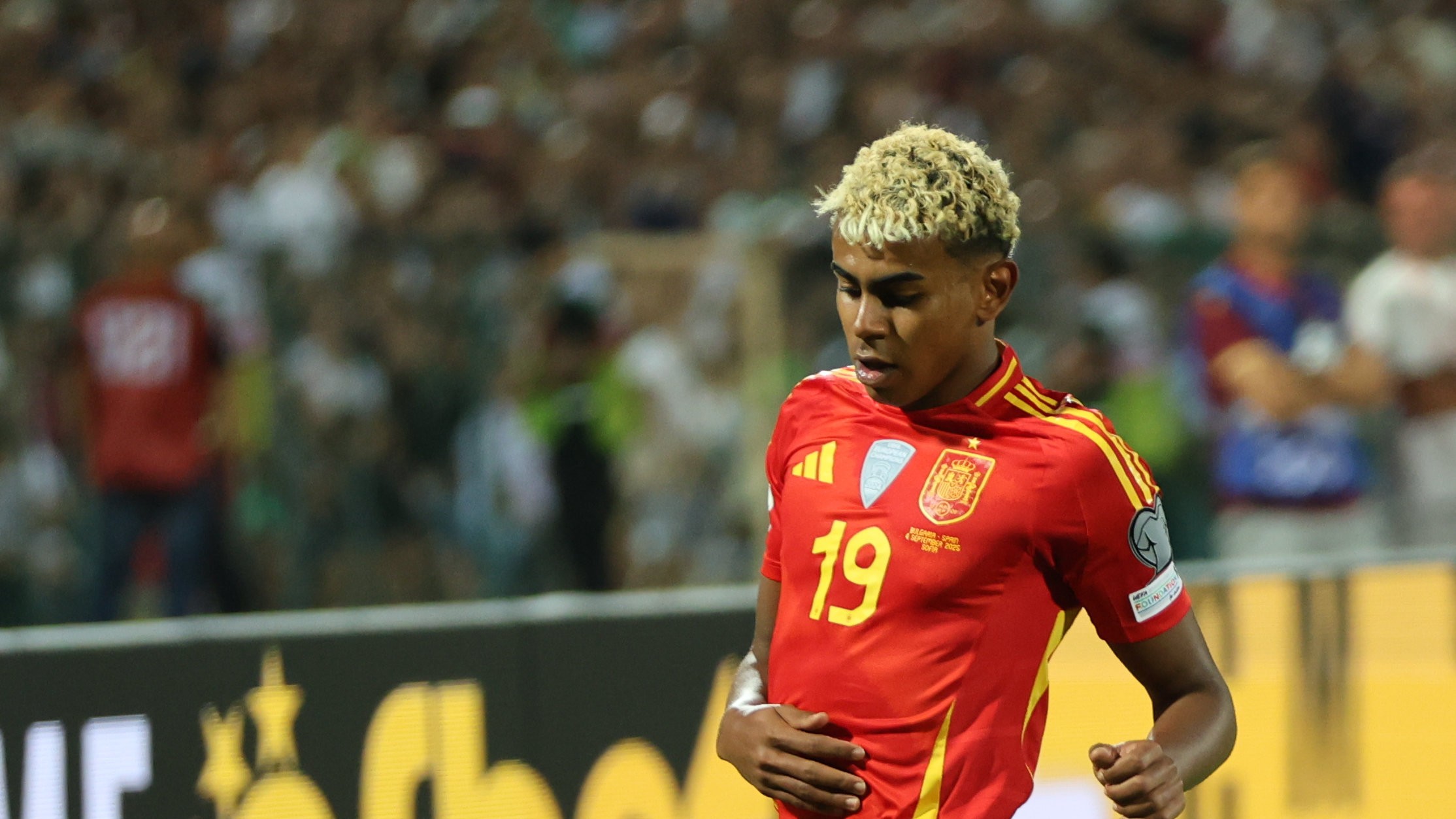
Spain's 2026 World Cup squad has eight Barcelona players out of 26. That's not just a historical curiosity. It's a structural feature that touches how the squad will actually play.
Why club concentration matters at a World Cup
International football has a preparation problem that club football doesn't. Club teams train together five or six days a week for ten months. National teams get a handful of camps, a few friendlies, and then a tournament window where everything has to work immediately.
The constraint compresses every phase of team-building. Shape, pressing triggers, passing patterns, positional rotations — all of it has to be installed in days rather than months. Managers who have coached at both levels describe the difference consistently: you can't build from scratch, you can only select players whose habits already fit.
A bloc of players from the same club arrives with those habits pre-loaded. They already know each other's first touch, how wide a winger drifts, when a midfielder drops to receive between the lines, which runs a centre-back expects from the fullback ahead of them. None of that needs to be taught. It just needs to not be disrupted.
Eight of Spain's 26 come from Barcelona: Joan García, Eric García, Pau Cubarsí, Gavi, Pedri, Lamine Yamal, Dani Olmo, and Ferran Torres. They span the spine — goalkeeper, centre-back, two central midfielders, two wide attackers, and a versatile forward. That's not a bench bloc. It's a starting-XI skeleton.
The 2010 and 2024 precedents
The most famous example of this effect is Spain's 2010 World Cup win. Seven Barcelona players were in the squad. Xavi, Iniesta, and Busquets formed the midfield triangle; Puyol and Piqué anchored the defence. The tiki-taka pattern that defined the tournament wasn't invented in the national team camp — it was imported from Barcelona's 2008–2010 peak.
Spain's 2024 European Championship win echoed the same structure in a different key. Five Barcelona players, a younger generation, a less possession-monopolistic style — but still a core of players who arrived at the tournament already knowing each other's spatial tendencies. The Yamal–Pedri connection on the right side was a Barcelona connection first.
The 2026 squad extends it further. Eight is the most Barcelona players in a Spain WC squad since at least 2010. The positions they fill — goalkeeper to centre-back to midfield pivot to both wings — mean that in any starting XI de la Fuente selects, four to six players will have trained together daily for the preceding club season.
What this looks like in practice
The advantage is most visible in two phases of play.
Build-up from the back. Cubarsí at centre-back and Pedri dropping into the left half-space is a Barcelona pattern. They've done it weekly under Flick for the entire 2025-26 season. In an international camp, a centre-back and a midfielder from different clubs need reps to calibrate the distance, the timing, and the press-avoidance angle. Cubarsí and Pedri don't.
Wide progression. Yamal on the right and Olmo drifting inward is another Barcelona pairing. The understanding of when Yamal holds width and when Olmo underlaps — or vice versa — is pre-built. Against compact international defences that sit in a low block, the speed of that rotation is the difference between a chance and a recycled possession.
The flip side is that an opponent who scouts Barcelona's patterns gets a read on how Spain's core will move. But at a World Cup, where group-stage opponents may not have the analytical infrastructure of Champions League clubs, the scouting asymmetry tends to favour the side with the more legible system — they execute it faster than opponents can decode it.
The club-of-origin breakdown
The full 26:
| Club | Players |
|---|---|
| Barcelona | 8 |
| Atlético Madrid | 3 |
| Athletic Club | 3 |
| Arsenal | 3 |
| Bayer Leverkusen | 1 |
| Manchester City | 1 |
| PSG | 1 |
| Real Sociedad | 1 |
| Chelsea | 1 |
| Tottenham | 1 |
| Crystal Palace | 1 |
| Celta Vigo | 1 |
| Osasuna | 1 |
Thirteen clubs represented overall. The second-largest bloc — Atlético Madrid, Athletic Club, and Arsenal with three each — is half the size of Barcelona's. No Real Madrid players are in the squad, the first time in World Cup history Spain has travelled without a Madridista on the roster.
How Spain's bloc compares across the field
Spain's eight Barcelona players is not the largest single-club bloc in the 48-team field. The Czech Republic named ten Slavia Prague players in their 29-man squad. Egypt have eight from Al Ahly. South Africa split evenly between Mamelodi Sundowns (9) and Orlando Pirates (9) in a 32-man roster.
What sets Spain apart is the level. Those other blocs are drawn from domestic leagues. Spain's is drawn from the club that won La Liga and reached the Champions League knockout rounds. The positional coverage also matters: goalkeeper to centre-back to central midfield to both wings. That is a spine, not a cluster.
Among traditional contenders with 26-man squads:
| Team | Largest club bloc | Second |
|---|---|---|
| Spain | Barcelona (8) | Athletic Club, Atlético Madrid, Arsenal (3 each) |
| Germany | Bayern Munich (7) | VfB Stuttgart (4), Borussia Dortmund (4) |
| France | Paris Saint-Germain (5) | Milan (2), Bayern Munich (2) |
| England | Manchester City (4) | Arsenal (4), Aston Villa (3) |
| Brazil | Flamengo (4) | Arsenal (2), Zenit (2) |
Germany is the closest structural parallel. Seven Bayern Munich players, four from Stuttgart, four from Dortmund — fifteen from the Bundesliga in total. Like Spain, Germany's domestic bloc spans the full XI. The difference is in midfield concentration: Spain's two starting central midfielders (Pedri and Gavi) share a club, which is where passing patterns are most position-specific. Germany's Bayern midfield presence is more varied.
England is the inverse case: instead of one dominant club, they split across Manchester City (4) and Arsenal (4). That's still eight players from two clubs who play each other twice a season — they know each other's tendencies, but from the opposite side of the fixture. The cohesion benefit is real but different: recognition, not synchronisation.
What our model says
Our model has Spain at 16.9% to win the tournament — the highest of any team in the 48-team field. Argentina is second at 16.8%, Brazil third at 9.7%. Spain's 95% bootstrap interval is [15.4%, 25.8%]. They have a 76.0% chance to win Group H, a 51.2% chance to reach the quarter-finals, and a 27.0% chance to reach the final.
The model is team-level and results-driven. It scores Spain on the outcomes of the matches Spain has played, not on the club affiliations of the players in the squad. Intra-squad familiarity — the thing this post is about — is invisible to the team-level fit.
That doesn't mean the model misses it entirely. The results the model trains on were produced by squads with heavy Barcelona representation. Euro 2024 was won with five Barcelona players. The qualifying campaign was played with a similar core. To the extent that club cohesion helped Spain win those matches, the model has already absorbed the benefit — it just can't attribute it to the club-cohesion channel specifically.
What the model can't do is predict whether eight is better than five, or whether the additional three Barcelona players in 2026 will compound the advantage or merely hold it steady. That question sits outside the model's resolution. It's the kind of thing that will only be answerable after the group stage, once we see whether Spain's build-up fluency under tournament pressure matches what the club-level familiarity would predict.
Where to read more
The tournament dashboard — with Spain's group probabilities and the full 48-team winner table — is at /tournament/. The methodology is at /docs/methodology/.
All numbers in this post are model outputs as of the May 28 snapshot. They are for research and educational purposes only — not betting advice, not financial advice, not recommendations to gamble. The model can be wrong. Methodology: /docs/methodology/. Full Terms of Use.