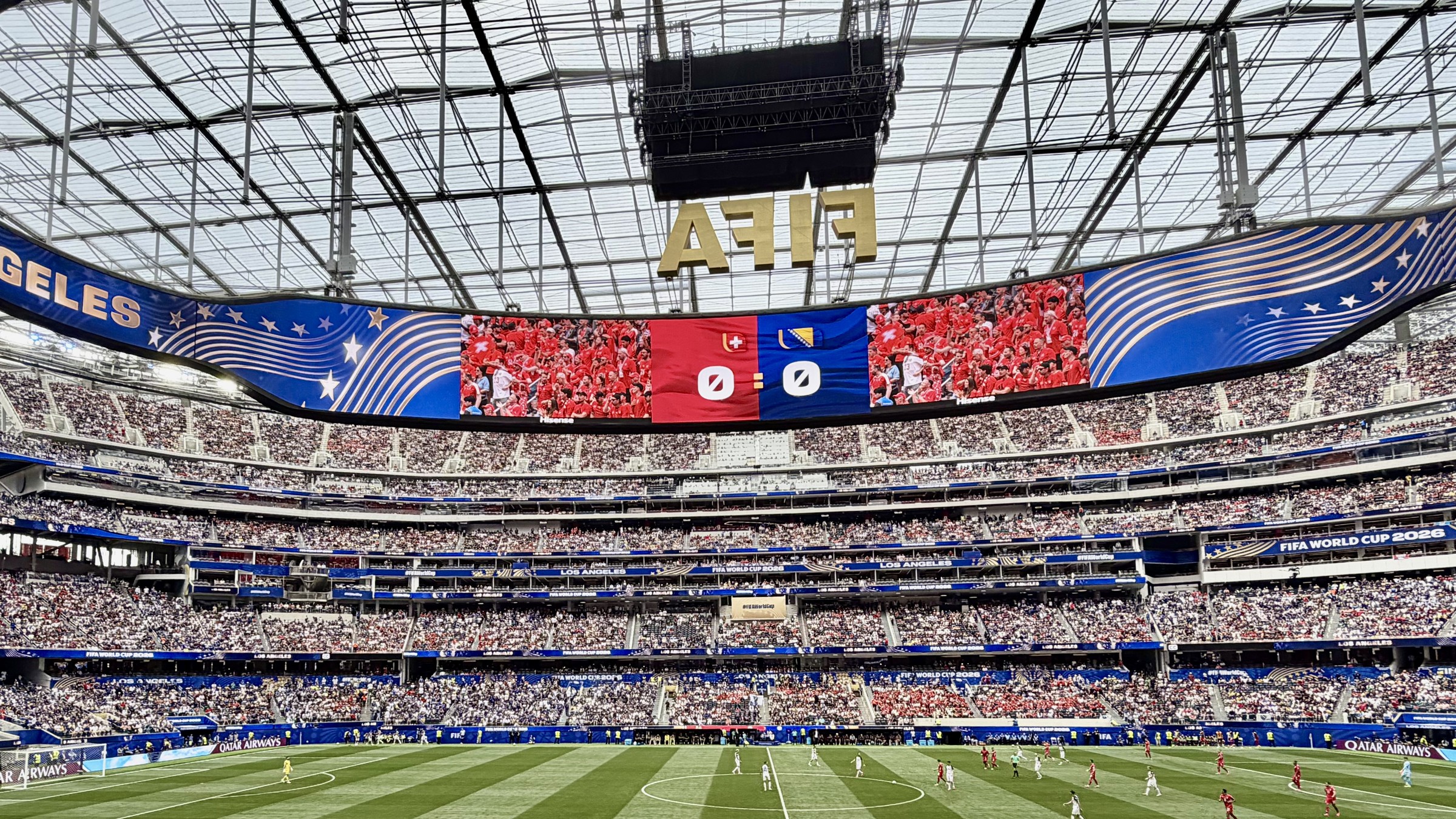
The group stage is over. Seventy-two matches, 18 days, 48 teams reduced to 32. The bracket is set, and the paths forward are not remotely equal.
The 2026 World Cup uses a 48-team format with 12 groups of four. The top two from each group advance directly. The eight best third-placed teams also go through. That produces 32 teams for the knockout round, slotted into a fixed bracket published by FIFA before the tournament began.
The bracket is not a reseed. Finishing position determines your opponent, and your quarter of the draw determines who you could face all the way to the final. Some teams drew paths that look like a gentle ramp. Others walked straight into a wall.
The 32 teams and their R32 matchups
The Round of 32 produces 16 matches. Eight are fixed pairings between group winners, runners-up, and third-placed teams. The other eight depend on which third-placed teams qualified, which determines their bracket slot via a FIFA-published lookup table.
The eight advancing third-placed teams come from Groups B, D, E, F, I, J, K, and L. That locks in the bracket.
| Match | Team A (pos) | Elo | Team B (pos) | Elo | Gap | |
|---|---|---|---|---|---|---|
| 73 | South Africa (2A) | 1529 | vs | Canada (2B) | 1779 | 250 |
| 74 | Germany (1E) | 1934 | vs | Paraguay (3D) | 1831 | 103 |
| 75 | Netherlands (1F) | 1966 | vs | Morocco (2C) | 1848 | 118 |
| 76 | Brazil (1C) | 1978 | vs | Japan (2F) | 1914 | 64 |
| 77 | France (1I) | 2093 | vs | Sweden (3F) | 1726 | 367 |
| 78 | Ivory Coast (2E) | 1700 | vs | Norway (2I) | 1935 | 235 |
| 79 | Mexico (1A) | 1880 | vs | Ecuador (3E) | 1883 | 3 |
| 80 | England (1L) | 2017 | vs | DR Congo (3K) | 1664 | 353 |
| 81 | USA (1D) | 1771 | vs | Bosnia and Herz. (3B) | 1597 | 174 |
| 82 | Belgium (1G) | 1852 | vs | Senegal (3I) | 1851 | 1 |
| 83 | Portugal (2K) | 1977 | vs | Croatia (2L) | 1924 | 53 |
| 84 | Spain (1H) | 2148 | vs | Austria (2J) | 1833 | 315 |
| 85 | Switzerland (1B) | 1879 | vs | Algeria (3J) | 1755 | 124 |
| 86 | Argentina (1J) | 2124 | vs | Cape Verde (2H) | 1582 | 542 |
| 87 | Colombia (1K) | 1988 | vs | Ghana (3L) | 1553 | 435 |
| 88 | Australia (2D) | 1786 | vs | Egypt (2G) | 1713 | 73 |
The range is enormous. Argentina face Cape Verde with a 542-point Elo advantage. Belgium face Senegal with a 1-point advantage. Those two matches are not in the same category.
The bracket tree
The R32 feeds into a fixed knockout tree. The 16 winners advance to 8 Round of 16 matches, then quarterfinals, semifinals, and the final. Here is the full structure.
Top half of the bracket (Semi 1):
Quarter A:
- R32: Germany vs Paraguay, France vs Sweden
- R16: Winners play each other
- Likely QF matchup: France vs Germany
Quarter B:
- R32: South Africa vs Canada, Netherlands vs Morocco
- R16: Winners play each other
- Likely QF matchup: Netherlands vs Canada
Quarter C:
- R32: Portugal vs Croatia, Spain vs Austria
- R16: Winners play each other
- Likely QF matchup: Spain vs Portugal
Quarter D:
- R32: USA vs Bosnia, Belgium vs Senegal
- R16: Winners play each other
- Likely QF matchup: USA vs Belgium
Bottom half of the bracket (Semi 2):
Quarter E:
- R32: Brazil vs Japan, Ivory Coast vs Norway
- R16: Winners play each other
- Likely QF matchup: Brazil vs Norway
Quarter F:
- R32: Mexico vs Ecuador, England vs DR Congo
- R16: Winners play each other
- Likely QF matchup: England vs Mexico/Ecuador
Quarter G:
- R32: Argentina vs Cape Verde, Australia vs Egypt
- R16: Winners play each other
- Likely QF matchup: Argentina vs Australia
Quarter H:
- R32: Switzerland vs Algeria, Colombia vs Ghana
- R16: Winners play each other
- Likely QF matchup: Colombia vs Switzerland
The top half is significantly stronger. France, Germany, Netherlands, Spain, and Portugal are all there. The bottom half's highest-rated team is Argentina (2124), followed by England (2017), then Colombia (1988) and Brazil (1978). The imbalance matters: one semifinal could produce a heavyweight collision, while the other could be more open.
The dream draws
Argentina received the most favourable path of any contender. Cape Verde in the R32 (542-point Elo gap), then the winner of Australia vs Egypt in the R16 (neither team rates above 1786), then likely Colombia or Switzerland in the quarterfinal. Argentina could reach the semifinal without facing a single top-10 Elo team. Messi's final tournament has been handed the smoothest bracket possible.
Colombia also landed well. Ghana in the R32 (435-point gap), Switzerland or Algeria in the R16, and then potentially Argentina in the QF. Colombia and Argentina are on the same side, so they cannot both make the semis, but the path to the QF is gentle for both.
England drew DR Congo (353-point gap) in the R32. The R16 would likely bring Mexico or Ecuador, both beatable. The quarterfinal is where it gets harder: Brazil or Japan would be waiting. But reaching a QF without facing a top-10 opponent is a favourable draw for any team.
France face Sweden in the R32 (367-point gap), the easiest matchup for any top-five team by Elo. The path tightens quickly, though. The R16 would pit France against the winner of Germany vs Paraguay. A France-Germany Round of 16 match is a plausible outcome, and one of them would be eliminated before the quarterfinals.
Canada qualified from Group B as runners-up and drew South Africa (250-point gap). Given that South Africa were the lowest-rated team to reach the knockouts, Canada received one of the best possible R32 opponents for a second-placed finisher. The R16 would likely bring Netherlands or Morocco, a step up but not a wall.
The nightmare draws
Belgium won Group G, which should guarantee a favourable R32 opponent. Instead, they face Senegal, rated 1851 to Belgium's 1852. One point of Elo separates them. This is as close to a coin flip as any R32 match can be. If Belgium survive, the R16 brings USA or Bosnia, and the QF likely brings Spain or Portugal. Belgium won their group and drew one of the hardest paths of any group winner.
Mexico won Group A with a perfect 9 points (the joint-best record alongside France and Argentina) and are the underdog in their R32 match. Ecuador's Elo (1883) is marginally higher than Mexico's (1880). A perfect group stage, rewarded with the closest possible matchup. Win that, and England is the likely R16 opponent. Win that, and Brazil waits in the QF.
Portugal finished second in Group K behind Colombia and drew Croatia (53-point gap). Two former semifinalists going head to head in the R32. The winner almost certainly faces Spain in the R16, then the USA-Belgium winner in the QF. Portugal's path from second round to semifinal runs through three strong European sides.
Brazil drew Japan (64-point gap), the closest R32 matchup of any group winner besides Belgium and Mexico. Japan are well-organized, rated 12th in tournament Elo, and have a track record of upsets at World Cups. Win that, and Norway or Ivory Coast follows, then potentially England in the QF. Brazil are good enough to handle all of these, but the path has no easy matches.
Croatia qualified as Group L runners-up and immediately face Portugal. The loser is out. Croatia's Elo (1924) is strong, but Portugal (1977) has the edge and the bracket position. Even winning that match leads to a likely R16 against Spain.
The five most interesting R32 matchups
1. Belgium vs Senegal (Elo gap: 1). The closest match by rating in the entire Round of 32. Belgium's golden generation is aging. Senegal beat Iraq 5-0 but lost to both France and Norway. Both teams are physical, both can defend. One of them is going home, and the model does not have a strong opinion about which.
2. Brazil vs Japan (Elo gap: 64). Japan drew the Netherlands 2-2, beat Tunisia 4-0, and drew Sweden 1-1 to finish second in Group F with 5 points. Brazil are stronger on paper, but Japan have already shown they can compete with a top-10 side.
3. Mexico vs Ecuador (Elo gap: 3). Mexico won their group. Ecuador finished third. The Elo says this is dead even. Mexico have the form (three wins, six goals, zero conceded). Ecuador have the rating. Something has to give.
4. Portugal vs Croatia (Elo gap: 53). Two perennial knockout-stage teams, both capable of deep runs. Portugal beat Uzbekistan 5-0 and drew Colombia 0-0 and DR Congo 1-1. Croatia beat Panama and Ghana but lost to England 2-4. The loser's tournament ends at the first knockout hurdle.
5. Australia vs Egypt (Elo gap: 73). Both teams surprised in the group stage. Australia finished second in Group D (ahead of Turkey and Paraguay), and Egypt finished second in Group G (ahead of Iran). Neither was expected to be here. Now one of them gets a Round of 16 match.
The third-placed survivors
Eight of twelve third-placed teams advanced. The cutoff fell between Senegal (3 points, GD +2, in) and Iran (3 points, GD 0, out). The margin was two goals of goal difference.
| Group | Team | Pts | GD | GF | R32 opponent |
|---|---|---|---|---|---|
| K | DR Congo | 4 | +1 | 4 | England |
| F | Sweden | 4 | 0 | 7 | France |
| E | Ecuador | 4 | 0 | 2 | Mexico |
| L | Ghana | 4 | 0 | 2 | Colombia |
| B | Bosnia and Herz. | 4 | -1 | 5 | USA |
| J | Algeria | 4 | -2 | 5 | Switzerland |
| D | Paraguay | 4 | -2 | 2 | Germany |
| I | Senegal | 3 | +2 | 8 | Belgium |
Four teams missed out. Iran drew all three matches (2-2, 0-0, 1-1) and still went home, eliminated on goal difference. South Korea beat Czechia but lost to Mexico and South Africa. Scotland beat Haiti but lost to Morocco and Brazil. Uruguay, the most notable absence, finished with just 2 points in a group with Spain, Cape Verde, and Saudi Arabia. Two draws and a loss to Spain. Cape Verde finished above them.
The bracket imbalance
The top half of the bracket contains five of the eight highest-rated teams: France (2093), Spain (2148), Portugal (1977), Netherlands (1966), and Germany (1934). That means at least three of them will be eliminated before the semifinal. The top half is a gauntlet. Potential collisions include France vs Germany in the R16, Spain vs Portugal in the R16, and the survivors meeting in the quarterfinal.
The bottom half is kinder. Argentina (2124) is the clear favourite, with England (2017), Colombia (1988), and Brazil (1978) the other contenders. The path to the final is more open, with fewer forced collisions between top teams.
For every team that qualified, the group stage is done. The bracket is fixed. Now the probabilities shift from group advancement to match-by-match knockout survival. The next post will publish the model's predictions for every R32 match.
Elo ratings are from the tournament-updated snapshot (June 25). They reflect group-stage results via standard K=40 neutral-venue updates. The full rating table is on the data page. The model publishes probabilities, not recommendations. Full methodology. Full Terms of Use.