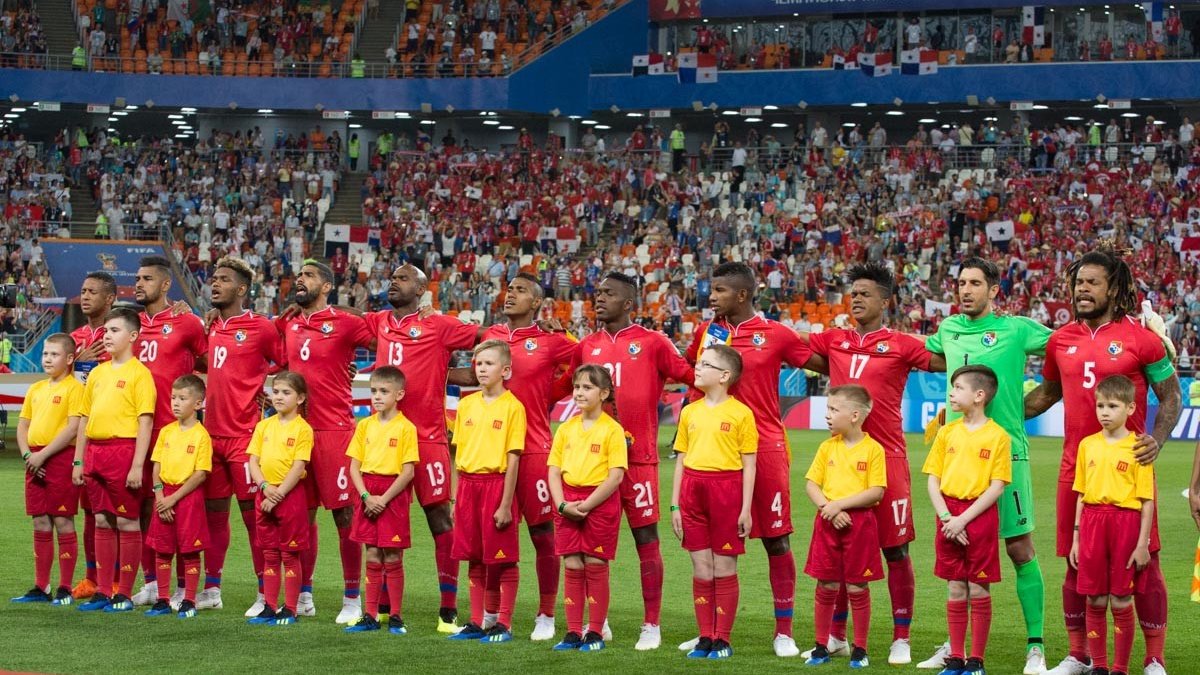
Groups K and L open today. Four matches, four fresh disagreements between the model and consensus. But one stands apart: Ghana vs Panama, where the model and the market do not just disagree on the margin. They disagree on who the favourite is.
Ghana vs Panama: the favourite flip
This is the model's biggest contrarian call of the tournament so far. Consensus rates Ghana at 41.5% to win, making them the favourite. The model rates Panama at 46.6%, making them the favourite. The gap on Panama's win probability alone is 18.1 percentage points. No match in this tournament has produced a wider disagreement.
The reason sits in the Elo ratings. Panama (1737) are 234 points above Ghana (1503). That gap is large. For context, England are 90 points above Croatia, and nobody questions that England are the favourite in that match. Panama's Elo advantage over Ghana is more than double that.
But the model's own components do not agree. The Elo-based model gives Panama a commanding 68.4%. The Dixon-Coles model, which adjusts for goal-scoring patterns, is much closer: Ghana 38.6%, Panama 31.4%. The hierarchical Poisson model splits the difference. When a model's internal disagreement is this wide, the ensemble average (Panama 46.6%) sits in uncertain territory.
Expected goals tell a tight story: Ghana 1.18, Panama 1.04. The modal scoreline is 1-1 at 13.9%. The model thinks a draw is the single most likely outcome.
Both coaches carry weight. Carlos Queiroz (Ghana) has five World Cup appearances as a manager, with Portugal and Iran. He has four months in this job. Thomas Christiansen (Panama) has 6.4 years and deep familiarity with his squad, but this is his first World Cup. Experience versus continuity.
Ghana traveled 8,466km. Panama traveled 3,905km. Timezone adjustment: Ghana shifted four hours, Panama one. Small factors, but they add up in a group-stage opener.
The draw probability: 27.1% (consensus: 29.5%). One of the few matches where the model and consensus roughly agree on the draw, while disagreeing completely on who wins.
England vs Croatia: barely a coin flip
The model gives England 50.3%. Consensus says 56.5%. That gap is modest, but the headline is not: the model sees this as essentially even.
England and Croatia have recent tournament history. Croatia knocked England out in the 2018 semifinal. They drew 0-0 in the 2022 group stage. Zlatko Dalić has been in charge for all of it: 9.4 years, three World Cups, a final, a semifinal, a third-place finish. Thomas Tuchel has been in the England job for 1.4 years. This is his first World Cup as a national team manager.
The Elo gap (90 points, England at 2020 vs Croatia at 1930) is the narrowest on today's card. All four model components land within two percentage points of 50% for England. The model has no strong view. When every component says "close to even," the ensemble does too.
Expected goals: England 1.40, Croatia 0.81. The most likely scoreline is 1-0 England at 14.7%. Croatia at 23.2% (consensus 17.5%) makes this the match where a "surprise" result would surprise the model least.
Croatia's Ante Budimir (7.4% match scoring probability) is rated the most dangerous forward in this match, ahead of both Harry Kane (5.5%) and Marcus Rashford (5.9%).
Uzbekistan vs Colombia: debut against an overpriced favourite
Consensus prices Colombia at 71.5%. The model says 61.8%. That 9.7-point gap follows the pattern: favourites overpriced, draws underpriced.
Uzbekistan are making their World Cup debut under Fabio Cannavaro, the 2006 World Cup-winning captain now managing at the tournament for the first time. They face the longest travel of any team today: 13,062km, with an 11-hour timezone shift. Colombia's James Rodríguez traveled 3,153km with a one-hour shift.
James Rodríguez leads all players in this match with an 8.8% scoring probability from midfield. Luis Díaz adds 6.1%. Uzbekistan's attacking threat is modest: Eldor Shomurodov at 2.3%, Abbosbek Fayzullaev at 1.7%.
The model's draw probability (25.8% vs consensus 19.5%) is the biggest single-outcome disagreement here. Uzbekistan's compact defensive approach, even at a travel disadvantage, could frustrate Colombia's build-up play.
Portugal vs DR Congo: Ronaldo, Wissa, and the draw gap
The closest match to consensus alignment. Model: Portugal 70.3%, consensus 75.5%. A 5.2-point gap on the favourite, smaller than the other three.
Cristiano Ronaldo opens his sixth World Cup at age 41. He carries a 9.8% match scoring probability. But the most likely goalscorer on the pitch is actually Yoane Wissa (Brentford), DR Congo's forward, at 10.6%. In a match where the model expects Portugal to score 1.96 goals to DR Congo's 0.51, Wissa's individual threat is worth watching.
DR Congo traveled 12,844km to reach the venue. Roberto Martínez's Portugal side have the clearest path to three points of any match today. The modal scoreline is 2-0 at 16.2%.
The draw gap: model 22.0%, consensus 17.5%. Four and a half points, consistent with the tournament-wide pattern.
The draws thesis: 50%
Eight draws from sixteen matches. A tournament draw rate of 50%.
The model predicted roughly 25%. Consensus was lower still. Reality has doubled both.
Today's matches continue the structural pattern. The model assigns higher draw probability than consensus in every match: Ghana-Panama 27.1%, England-Croatia 26.4%, Uzbekistan-Colombia 25.8%, Portugal-DR Congo 22.0%. All above 20%. All above consensus.
At some point, regression to the mean will compress the 50% back toward historical norms (roughly 25% in World Cup group stages). The question is when. Sixteen matches is still a small sample, but it is no longer a fluky two-match run. This is a sustained pattern across three matchdays, multiple groups, and varied team profiles.
The model's draw calibration has held up reasonably well: the observed draw rate in its 20-30% probability bucket is tracking above prediction but not wildly off. What the model did not predict was the volume. Eight draws in sixteen is double the historical base rate.
All probabilities are pre-match model outputs, locked before kickoff. The model publishes probabilities, not recommendations. Methodology: /docs/methodology/. Full Terms of Use.