노트
게시글
확률 연구, 모델 스냅샷, WC2026에 관한 짧은 노트.
1 Jul 2026
July 1: France demolish Sweden, Haaland rescues Norway, Mexico end a 40-year drought
R32 Day 3 delivered three comfortable results after Day 2's chaos. France dismantled Sweden 3-0 (Mbappe 45', 74', Barcola 53'), giving Mbappe 9 World Cup knockout goals, a new all-time record. Norway beat Ivory Coast 2-1 thanks to Haaland's 86th-minute winner, Norway's first-ever World Cup knockout win. Mexico beat Ecuador 2-0 at the Azteca for their first knockout victory in 40 years. The model called France (9.1%) and Norway (0.9%) correctly. Mexico (0.4%) was the miss: a near coin-flip the model gave to Ecuador.
#- world-cup-2026
30 Jun 2026
June 30: Paraguay eliminate Germany, Martinelli rescues Brazil, Morocco outlast the Netherlands
Three Round of 32 matches, two penalty shootouts, one 96th-minute winner. Paraguay, who lost 1-4 to the USA in the group stage and scored just 2 goals in 3 matches, knocked out four-time champions Germany on penalties (1-1, 4-3 pens). Brazil survived Japan thanks to Gabriel Martinelli's stoppage-time winner (2-1). Morocco equalized in the 91st minute against the Netherlands and won in a shootout (1-1, 3-2 pens). The model favoured Germany (4.8%) and had Brazil as marginal favourites (13.3%). It called Brazil correctly. Germany was the tournament's biggest R32 miss so far.
#- world-cup-2026
29 Jun 2026
Four models are better than three
The ensemble just got a fourth model. A small neural network that learns team-vs-team interactions the linear models miss. It passed an 8-fold backtest, improving the ensemble's calibration by 0.74 percentage points and its Brier score by 16 basis points. Here is what it is, why it works, and what it cost to get right.
#- methodology
29 Jun 2026
June 29: Brazil face Japan, Germany meet Paraguay
The knockout round opened last night: Canada 1-0 South Africa, Eustaquio in the 92nd minute, the model's first knockout call correct at 50.9%. Today brings Brazil vs Japan at NRG Stadium in Houston (model: 49.5% vs 22.9%, Elo gap 64) and Germany vs Paraguay at Gillette Stadium in Boston (52.5% vs 19.9%, Elo gap 103). Brazil's high press meets Japan's low block. Germany enter on a loss to Ecuador. Paraguay qualified with just 2 goals in 3 matches. If it goes to penalties, Germany's record (6 of 7 shootouts won) is the best of any remaining team.
#- world-cup-2026
28 Jun 2026
Group stage scorecard: grading all 72 predictions
The group stage is done and every prediction is on the record. Across 72 matches, the model averaged a Brier score of 0.516, with 57% of predictions graded A or A+. Group I (France's group) and Group J (Argentina's group) were the easiest to read. Group H (Spain, Uruguay, Cape Verde) was the hardest, anchored by the Spain 0-0 Cape Verde opener. Here is the full scorecard, group by group.
#- world-cup-2026
28 Jun 2026
Path to the final: every team's bracket mapped
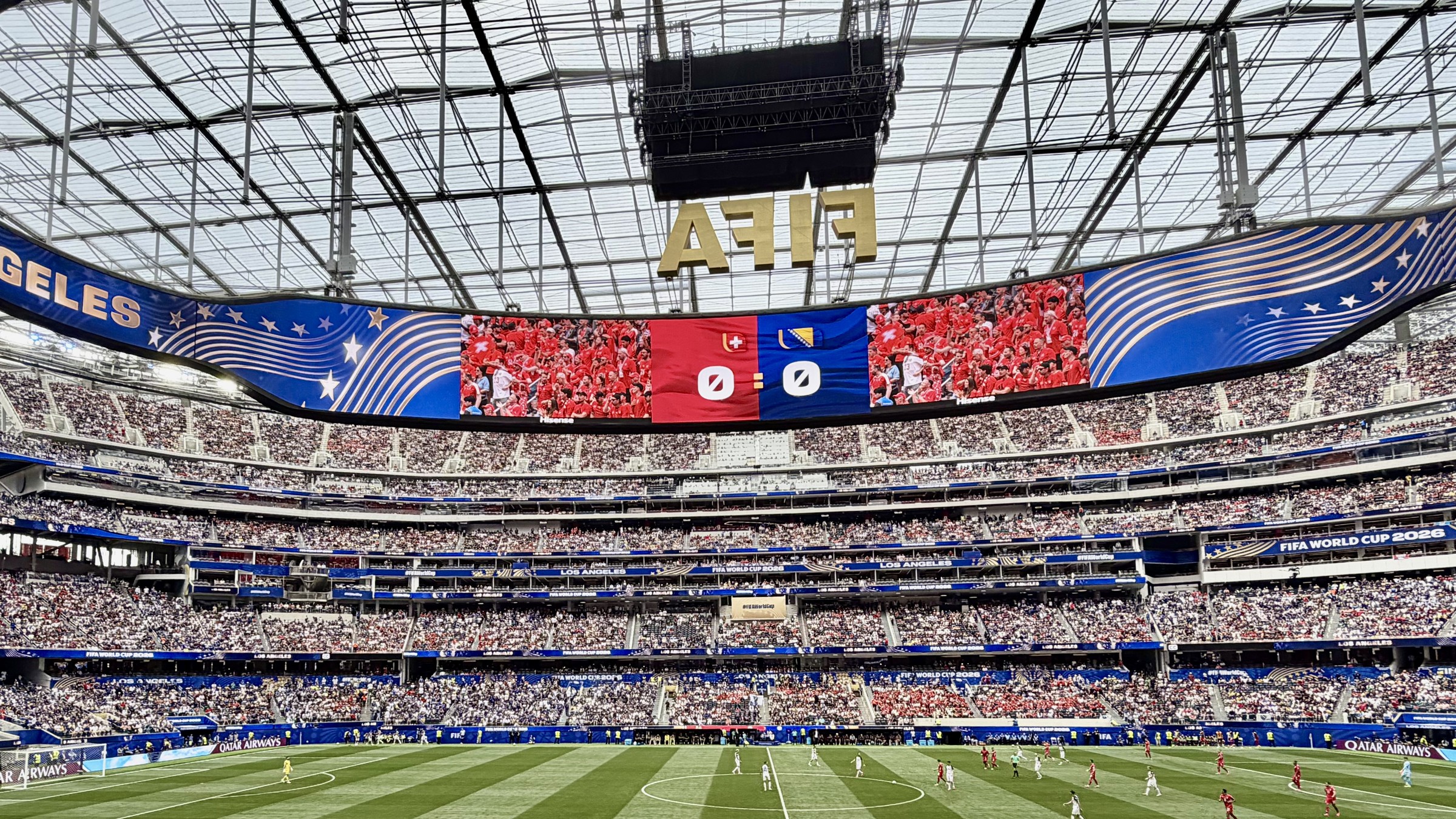
The knockout bracket is set. We traced every team's path from the Round of 32 through to the final. Argentina's route to the title match could avoid every top-10 side until the semifinal. Austria's path runs through Spain, Portugal, and France before a potential final against Argentina. The bracket halves are wildly unbalanced: five of the eight highest-rated teams are crammed into the top half, guaranteeing a bloodbath. Here is the full map.
#- world-cup-2026
28 Jun 2026
The final 18: how the group stage ended
The group stage is done. Seventy-two matches, twelve groups, thirty-two teams through. Turkey stunned the USA in stoppage time. Ecuador scored their first goals of the tournament and beat Germany. Dembele hit a hat trick against Norway. Cape Verde qualified with three draws. Messi scored in a seventh consecutive World Cup match, a record. Kane passed Lineker. The model went 10 for 18 on direction across the final three matchdays (mean Brier 0.443), finishing the group stage at 0.516 overall. The draws kept hurting: seven of the eight misses were draws the model did not have as its top call.
#- recap
25 Jun 2026
June 25: South Africa shock South Korea, Brazil cruise
South Africa beat South Korea 1-0 to reach the knockout round for the first time, the model's only miss of the day. Brazil topped Group C with a Vinicius Jr brace, Morocco came back from behind to beat Haiti 4-2, and Mexico finished Group A with a perfect record. Five correct calls from six, mean Brier 0.442. Now Groups D, E, and F decide: USA face Turkey, Germany play Ecuador, Netherlands look to seal Group F.
#- recap
25 Jun 2026
What 54 World Cup matches taught the model
The group stage is almost over. Fifty-four matches graded, every probability scored. The model's overall Brier is 0.541, better than its own pre-tournament backtest of 0.572. But that headline masks a rougher truth: a brutal opening week, a draw blind spot the calibrator never saw coming, and heavy favourites who kept stumbling. Here is the full scorecard, the experiments we ran mid-tournament, the results that survived testing, and the ones that didn't.
#- calibration
24 Jun 2026
Standard Pass: $10 through the end of group stage
The group stage wraps up this week. Before the knockouts begin, we're dropping the Standard Pass to $10 (from $15). Every match forecast, every pre-match probability, every post-match scorecard, for less than 10 cents a game. The price goes back up when the Round of 32 kicks off.
#- announcement

23 Jun 2026
June 23: Messi makes history, Mbappe makes it rain
Lionel Messi scored both goals against Austria to reach 18 career World Cup goals, the most by any player in the history of the tournament. France beat Iraq 3-0 through a thunderstorm delay in Philadelphia, Mbappe twice, and qualified alongside Norway, who edged Senegal 3-2 in a Haaland brace. The model went three from four on direction (mean Brier 0.267), missing only the Norway-Senegal swing it had rated near even. Now Groups K and L: Portugal need a win, England face Ghana with the widest quality gap of the day, and Croatia vs Panama is a must-win for a former finalist.
#- recap
22 Jun 2026
June 22: Spain answers, Egypt arrives
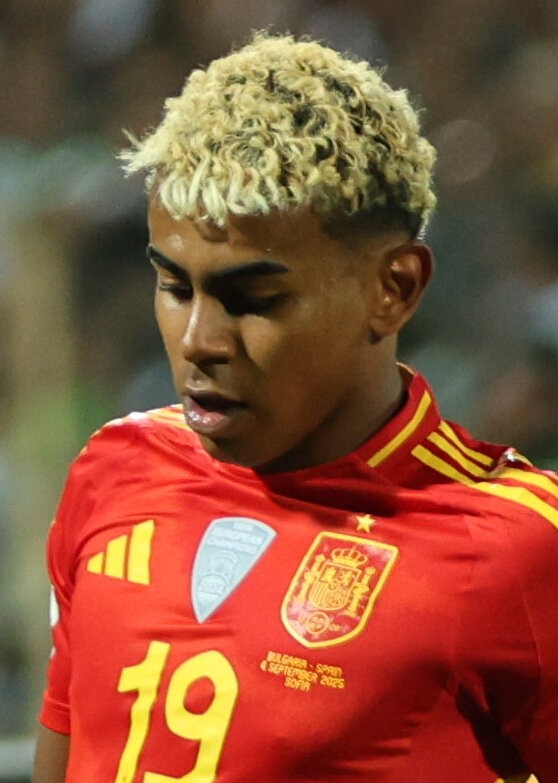
Spain put four past Saudi Arabia in half an hour. The model's best single-match score of the tournament: Brier 0.039. Egypt came back from 1-0 down at the break to beat New Zealand 3-1, their first World Cup win in history. Salah scored. And the draw groups held form: Belgium drew again (0-0 Iran, red card, 23 shots, nothing), Cape Verde drew again (2-2 Uruguay, another comeback). Six draws from eight matches in Groups G and H. Now Groups I and J arrive: Argentina vs Austria for the table, France vs Iraq, Senegal's must-win against Norway, and Algeria vs Jordan where the loser is all but out.
#- recap
22 Jun 2026
Every player rated, every substitute mapped: deep match visualization is live
Every fixture page now has a deep interactive visualization: starting XIs, scoring threat, player ratings, defensive shape, synergy lines, and squad-depth analysis. Click any player, swap them for their real bench alternative, and watch the model recalculate. France's most irreplaceable player is not Mbappe. Argentina get better when Otamendi sits. The numbers are all here.
#- feature
22 Jun 2026
We grade every prediction we publish. Here's the scorecard.
36 matches graded. 18 strong calls. 6 outright misses. The model's mean Brier is 0.598, markets are at 0.569. We built a page that holds us accountable in real time: every match gets a letter grade, the running mean updates daily, and the misses sit right next to the best calls. No hiding.
#- calibration
21 Jun 2026
June 21: the draw groups
Sweden scored five on Matchday 1. Netherlands scored five on Matchday 2. The preview reel said 'still underdogs' and the model was right. Meanwhile Curacao held 82% Ecuador to 0-0, the model's worst single-match miss. Now Groups G and H arrive: four matches, four draws, zero wins on Matchday 1. Spain drew 0-0 with Cape Verde and dropped three percentage points. The model barely moved.
#- recap
21 Jun 2026
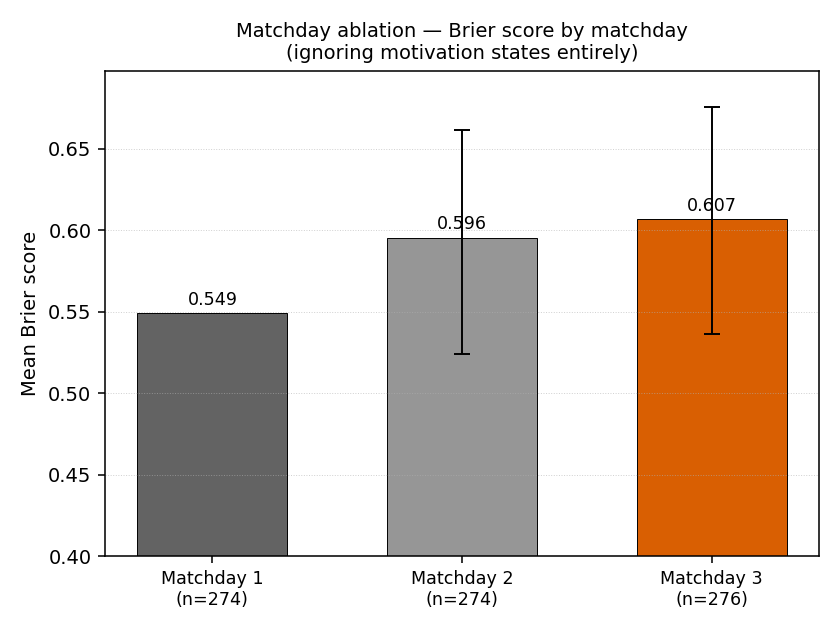
Do teams try harder in must-win games? (No, actually)
We classified 830 group-stage matches across 23 major tournaments by incentive state (must-win, dead rubber, draw-enough) and tested whether outcomes deviate from the baseline model. The apparent signal disappeared entirely once we controlled for a simple confounder: matchday. The dead rubbers were actually easier to predict, not harder.
#methodology#negative-results#research#calibration

19 Jun 2026
June 19: the hosts are underdogs
The model's best day of the tournament: 0.426 mean Brier, three of four results called correctly. Canada scored six, 0.9km from home. Then the model does something strange: it rates Australia above the hosts. In Seattle. In the USA's own World Cup. Australia flew 13,065km. The model still rates them higher.
#- recap

18 Jun 2026
June 18: the hosts flex
The model's biggest contrarian call of the tournament was wrong. Ghana beat Panama 1-0 in the 95th minute, after we led the preview with 'the model flips the favourite.' Honest reckoning below. Then Matchday 2 begins with the most lopsided travel card of the group stage: Canada traveled 0.9km to their match. Qatar traveled 11,697km to theirs.
#- recap
17 Jun 2026
What the video saw: rating every team from matchday 1
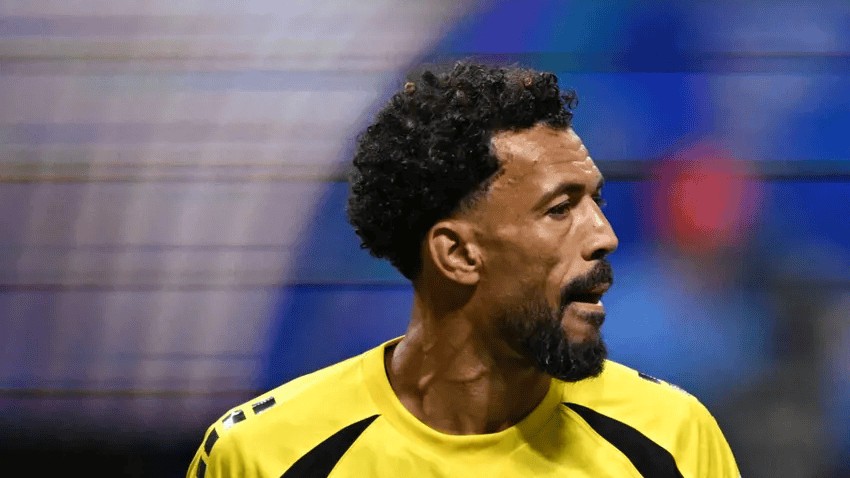
We built a system that watches every World Cup highlight reel and scores every visible player on a 1-10 scale. After 16 matches, here is what it found. Mexico top the table. Czech Republic scored 8.0 and lost. Four of the thirteen top-rated players were goalkeepers. The numbers tell a different story from the scoreline.
#- video-analysis
17 Jun 2026
June 17: Panama flips the script
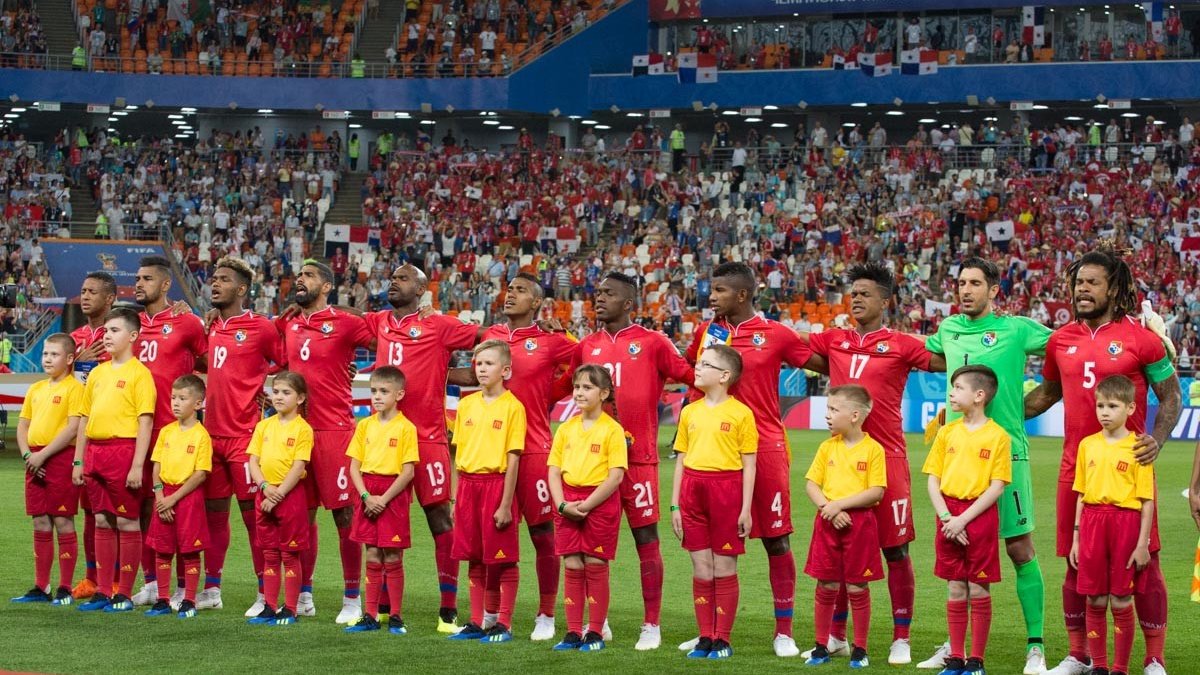
Groups K and L open today with four matches. The model's biggest call is Ghana vs Panama, where it completely flips the favourite. Consensus says Ghana at 41.5%. The model says Panama at 46.6%. England are barely a coin flip against Croatia. Colombia are overpriced. And the draws thesis hits 50%.
#- ghana
16 Jun 2026
June 16: the model disagrees with everyone
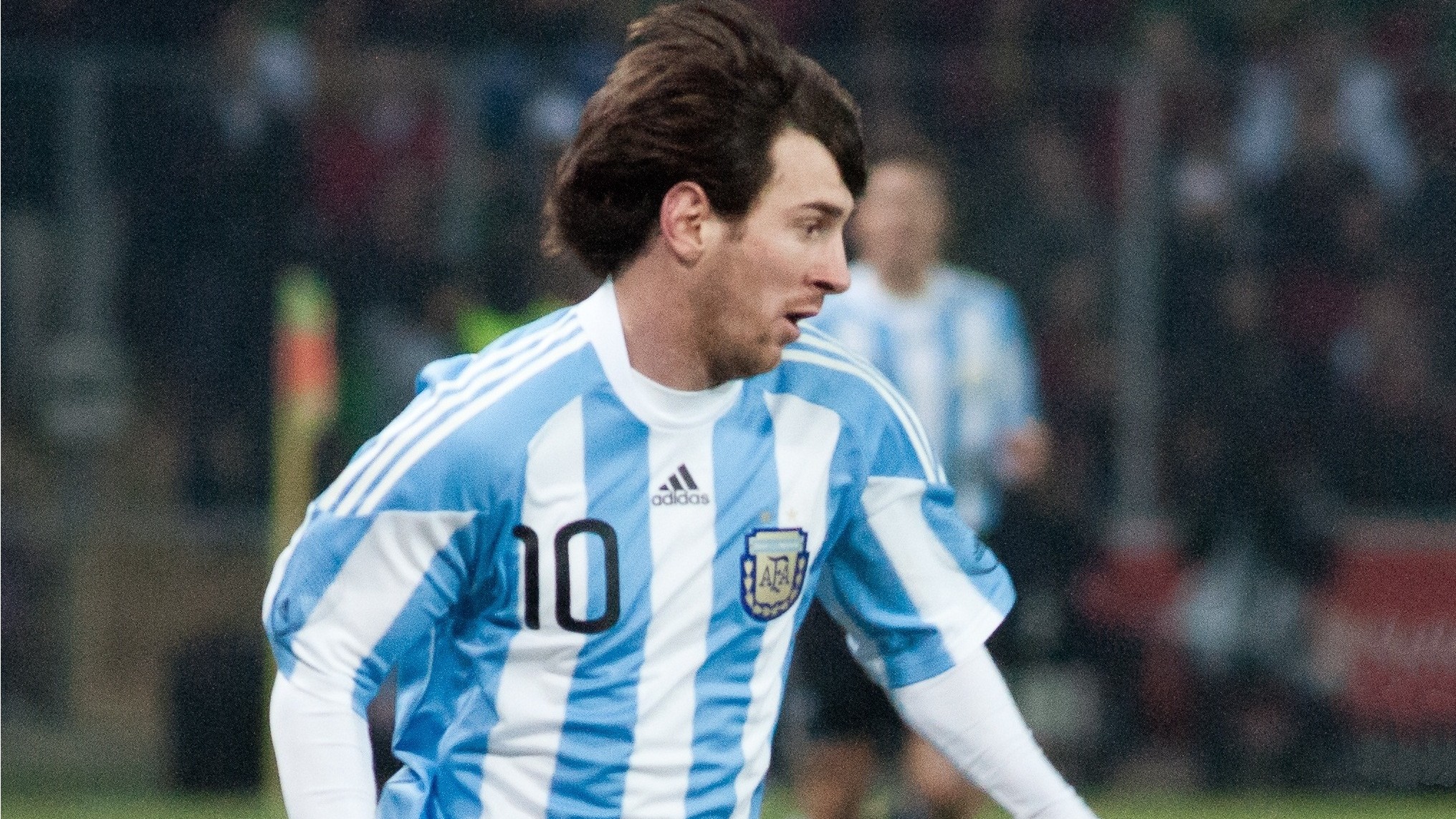
Four matches today across Groups I and J. The model is 10+ points lower on France than consensus, 13 points lower on Norway, and 13 points lower on Austria. Three of four favourites are overpriced according to our numbers. Messi begins his sixth and final World Cup. And the draws thesis keeps running at 33.3%.
#- france
15 Jun 2026
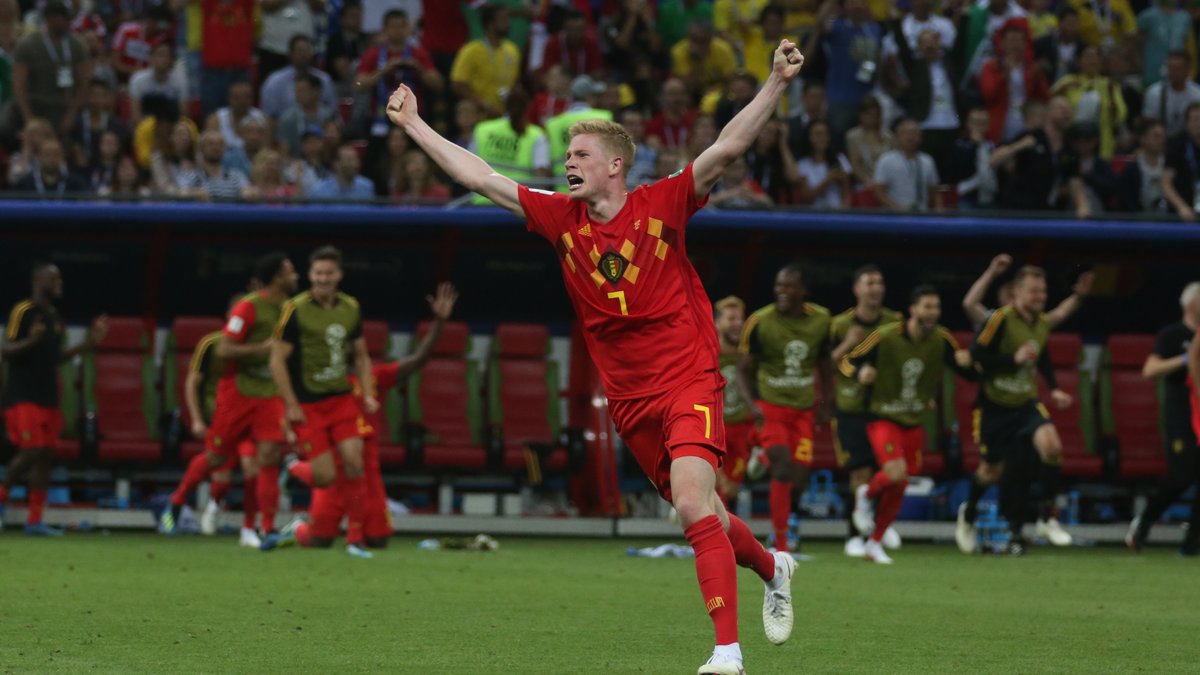
June 15: the last dance and a ghost from 2022
Four matches today across Groups G and H. Belgium's golden generation (De Bruyne 35, Lukaku 33, Courtois 34) face Egypt and Mohamed Salah in what is almost certainly both sides' final World Cup. Saudi Arabia meet Uruguay, and everyone remembers Lusail 2022. The model's biggest divergence from prediction markets is Iran vs New Zealand, where our contrarian call gets tested.
#- belgium
14 Jun 2026
Brazil 1-1 Morocco: the receipt
The model gave Brazil a 50.1% probability of winning, with a 30.2% draw. Prediction markets had the draw at roughly 22%. The result at MetLife Stadium was 1-1, and Morocco outperformed Brazil on xG (1.37 to 1.26), ground duels (59%), and dribbles (55% to 19%). The 8-point gap between the model and prediction markets on the draw is the structural underpricing pattern we documented before the tournament.
#- brazil
14 Jun 2026
Qatar 1-1 Switzerland: what the model missed
The model gave Switzerland a 73.2% win probability and expected them to generate 2.54 xG. Switzerland actually generated 3.20 xG, took 26 shots, and created six big chances. They missed five of them. Qatar equalized via a Swiss own goal in the 94th minute. The model was right about the process and wrong about the result.
#- qatar
13 Jun 2026
June 13: four matches, one coin flip
Brazil vs Morocco is the closest match the model has seen so far, at 50.1% vs 19.7% with a 30.2% draw probability. Qatar face Switzerland as heavy underdogs (8.4%), Haiti host Scotland, and Australia meet Turkey in another tight contest. The draws thesis gets its toughest test yet.
#- daily-briefing
13 Jun 2026
Opening weekend: the model vs reality
Four matches played, four results in. Mexico won as expected, South Korea came from behind, Canada were held to a draw, and the USA beat Paraguay despite the model rating them as underdogs. Early calibration notes, video highlights, and what prediction markets got wrong about draws.
#- recap
12 Jun 2026
The June 12 briefing: every match in probabilities
2 matches on June 12, led by United States v Paraguay (32.2% / 29.4% / 38.3%). Expected goals, scorelines, first-goal timing, and the Elo-baseline comparison for every match. Standard Pass.
#- daily-briefing
11 Jun 2026
Argentina and Spain: 0.6 points apart, nothing else in common
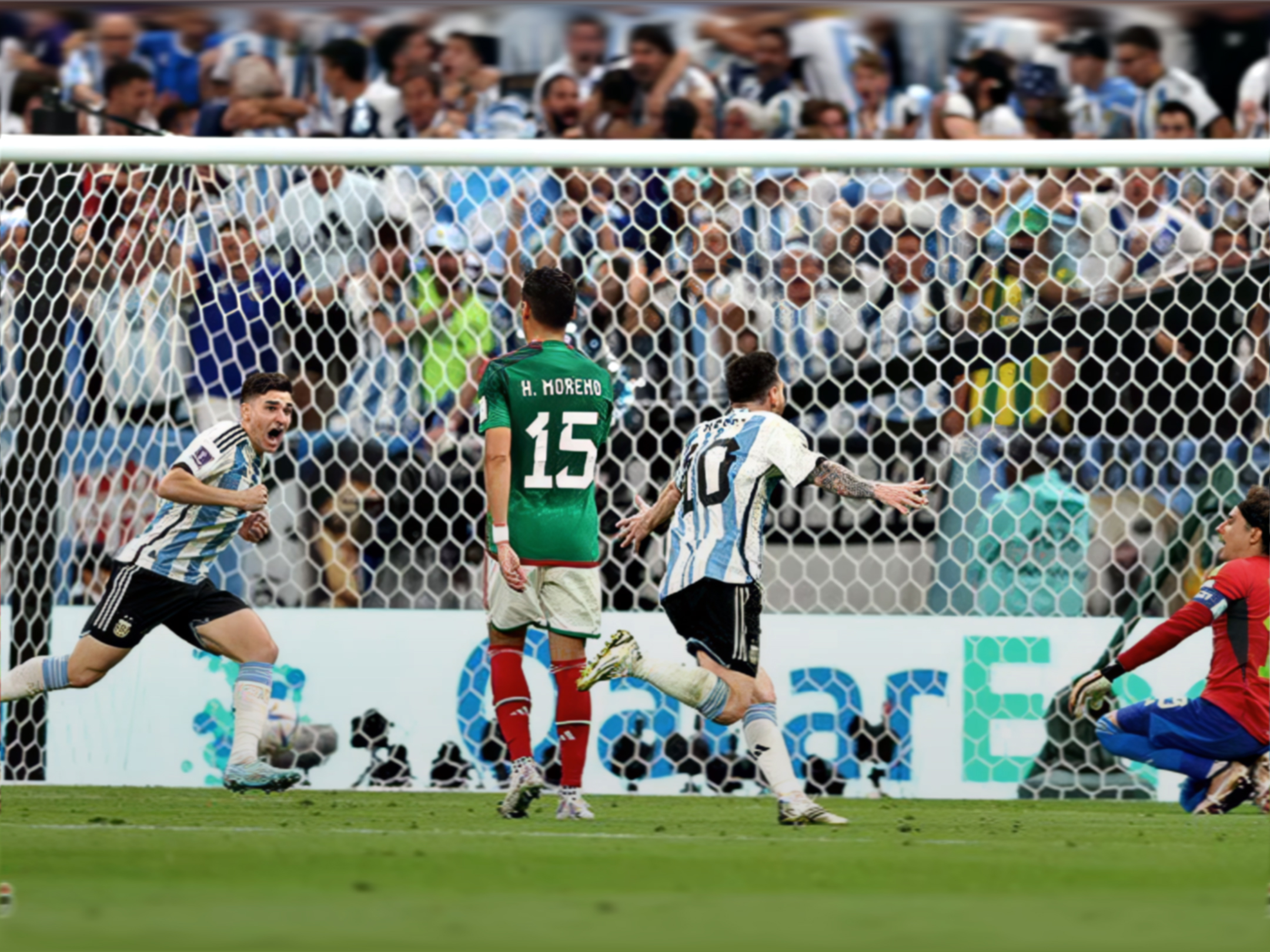
The model's two most likely World Cup winners sit at 17.5% and 16.9%, a gap well inside simulation noise. They get there via opposite paths. Argentina runs through the best defensive rating in the field and a penalty advantage worth 5 percentage points on its own; Spain runs through attacking volume and a Barcelona spine. Both teams' nearest historical analogues exited earlier than expected.
#spain#argentina#world-cup-2026#model
11 Jun 2026
Why prediction markets keep underrating World Cup draws
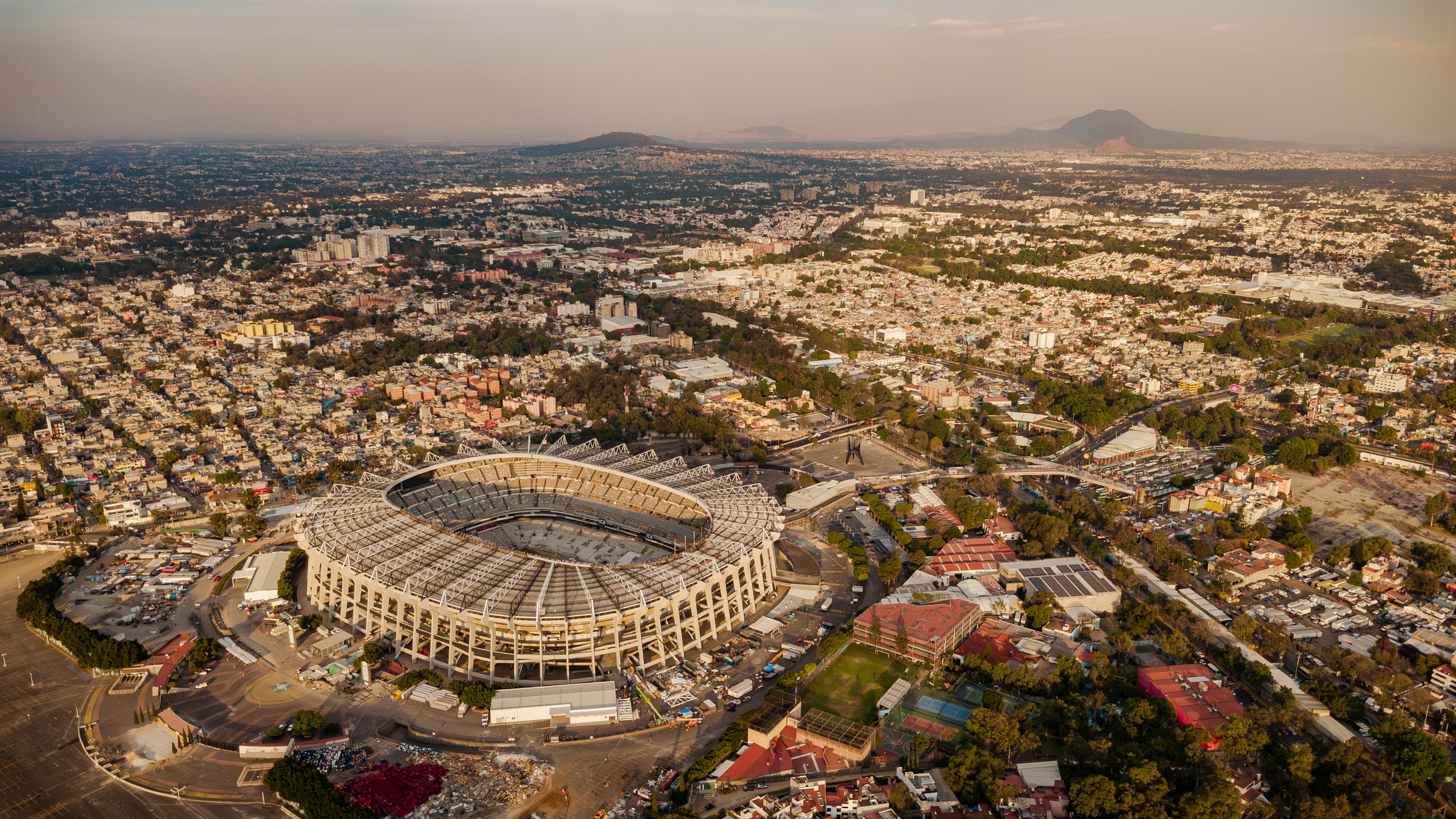
Prediction markets consistently compress draw probabilities in World Cup openers. The model disagrees. Here's why the structure of prediction markets makes draws hard to price correctly, and what the numbers say about today's two Group A matches.
#prediction-markets#draws#model-vs-consensus#world-cup-2026
11 Jun 2026
Five places the model disagrees with the consensus
Models don't know narratives. They read results, schedules, and xG rates. Here are five places ours diverges most from the consensus, from Ecuador over Germany to Raphinha as the #1 anytime scorer, Iran at 81%, Spain and Argentina pulling away, and the USA as the underdog in every group match at home.
#model-vs-consensus#world-cup-2026#methodology#group-stage
10 Jun 2026
The model never stops predicting. Here's the number we grade ourselves on
The model retrains nightly and its published probabilities move by the hour. The rows it gets graded on do not. Every group-stage forecast froze this morning, at least 24 hours before kickoff; a second freeze pins the published number three hours before each match; both land in public JSON files; and the Internet Archive holds receipts that the numbers came first.
#world-cup-2026#methodology#calibration#accuracy
9 Jun 2026
Brazil vs Morocco is a coin-flip. The model has it 50–30–20.
Our model gives Brazil a 50.1% probability of winning their Group C opener against Morocco — essentially a coin-flip between Brazil winning and not-winning. Morocco, the first African nation to reach a World Cup semifinal, is rated far closer to Brazil than most people expect. The group picture tells the rest of the story.
#brazil#morocco#group-c#match-preview
8 Jun 2026
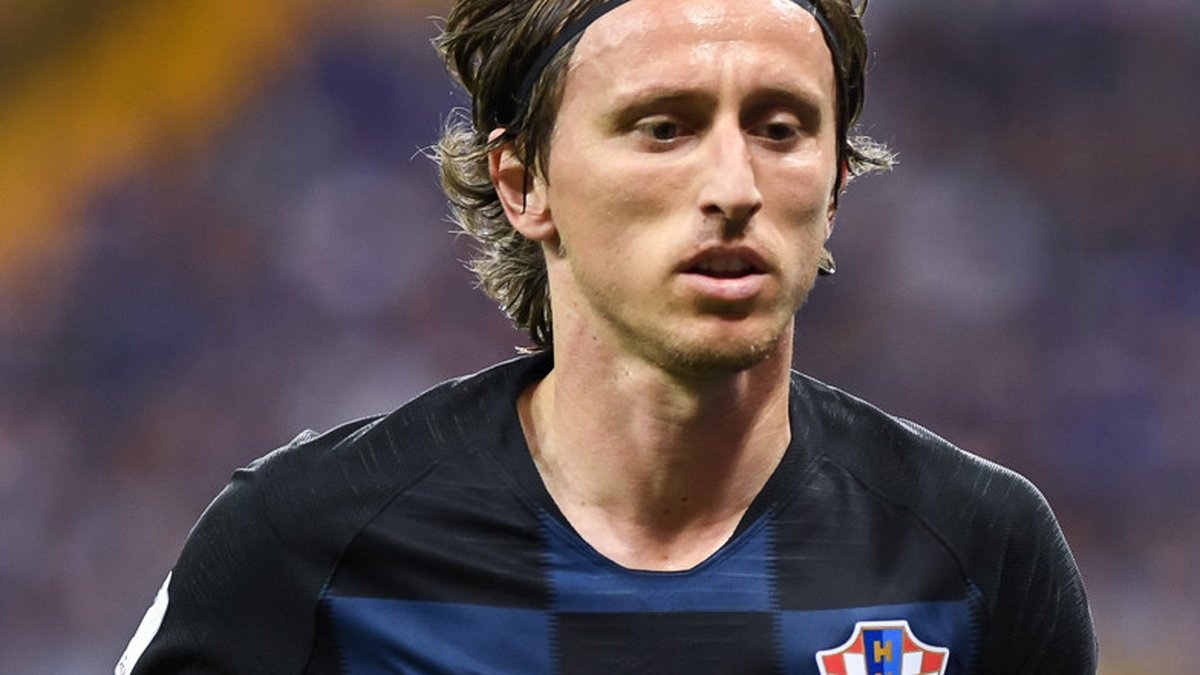
Luka Modrić was six years old when his grandfather was killed and his family fled. He's 40 now. This is his last World Cup.
In 1991, six-year-old Luka Modrić became a refugee. In 2018, he dragged a nation of four million to the World Cup final and won the Ballon d'Or. In 2026, at 40, he will captain Croatia one last time — opening against England, the team he beat in that 2018 semifinal. The arc of a career that started in a hotel parking lot in Zadar.
#croatia#modric#last-dance#veterans
7 Jun 2026
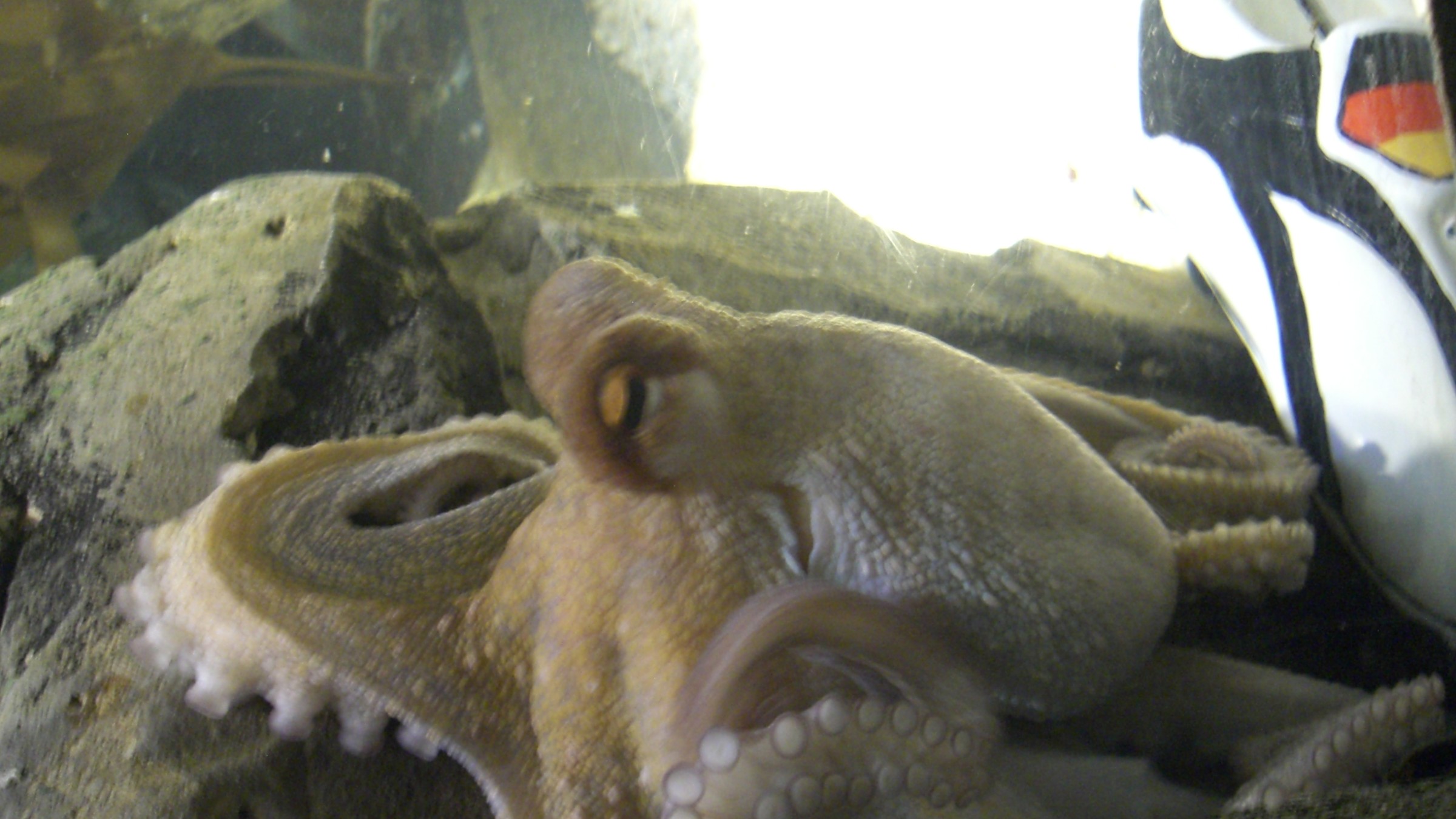
What it takes to beat an animal oracle
A psychic octopus called all eight of its 2010 World Cup matches correctly. That is a one-in-256 coin streak, and it is the wrong thing to envy. The thing a model can do that an animal oracle never could is tell you how sure it is — and then be held to it across hundreds of matches. Here is what "beating the oracle" actually means.
#calibration#methodology#forecasting#research
7 Jun 2026
What the 48-team format actually changes
The 2026 World Cup expands from 32 to 48 teams, adds a Round of 32, and lets eight third-place finishers advance. Our model shows what these structural changes do in practice — two-thirds of the field advances, four teams hold 53% of the championship probability, and the group stage becomes a near-formality for 13 nations. The format creates more football, more representation, and a sharper divide between the teams that are there to compete and the teams that are there to participate.
#world-cup-2026#format#expansion#analysis
6 Jun 2026
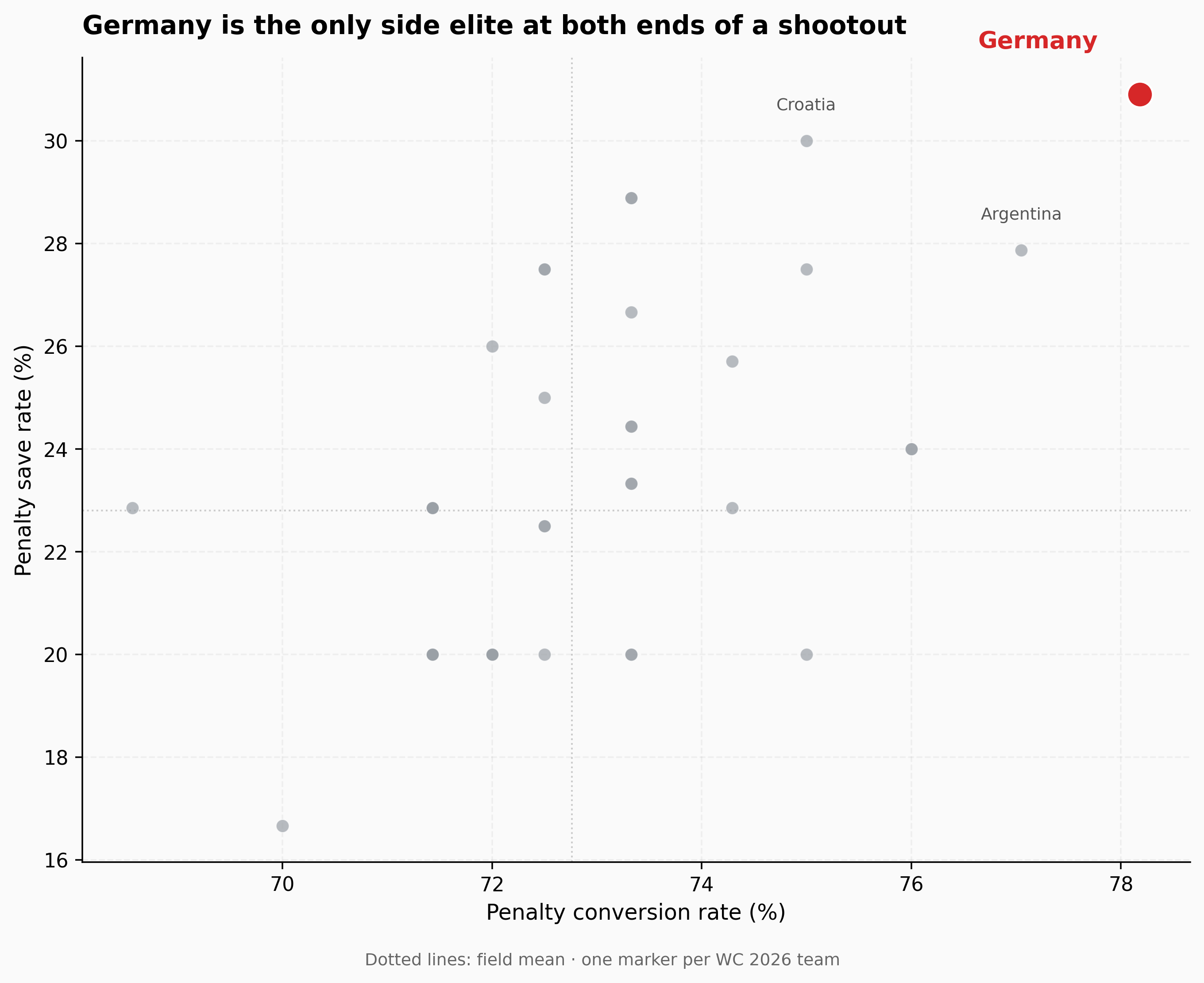
Germany ranks first of 48 at both ends of a shootout — and is still only the model's 7th-likeliest champion
The cliche that Germans never miss from the spot is, for once, literally true in the model. Of all 48 teams, Germany ranks first in penalty conversion and first in penalty save rate — the only side top of the field at both ends of a shootout. Yet the model still puts Germany seventh in champion probability, at about 4.8%. A scenario test that resets its spot-kick numbers to league average cuts that title probability by roughly a third — so the shootout advantage is real, already counted by the model, and still not enough.
#world-cup-2026#germany#penalties#shootouts
6 Jun 2026
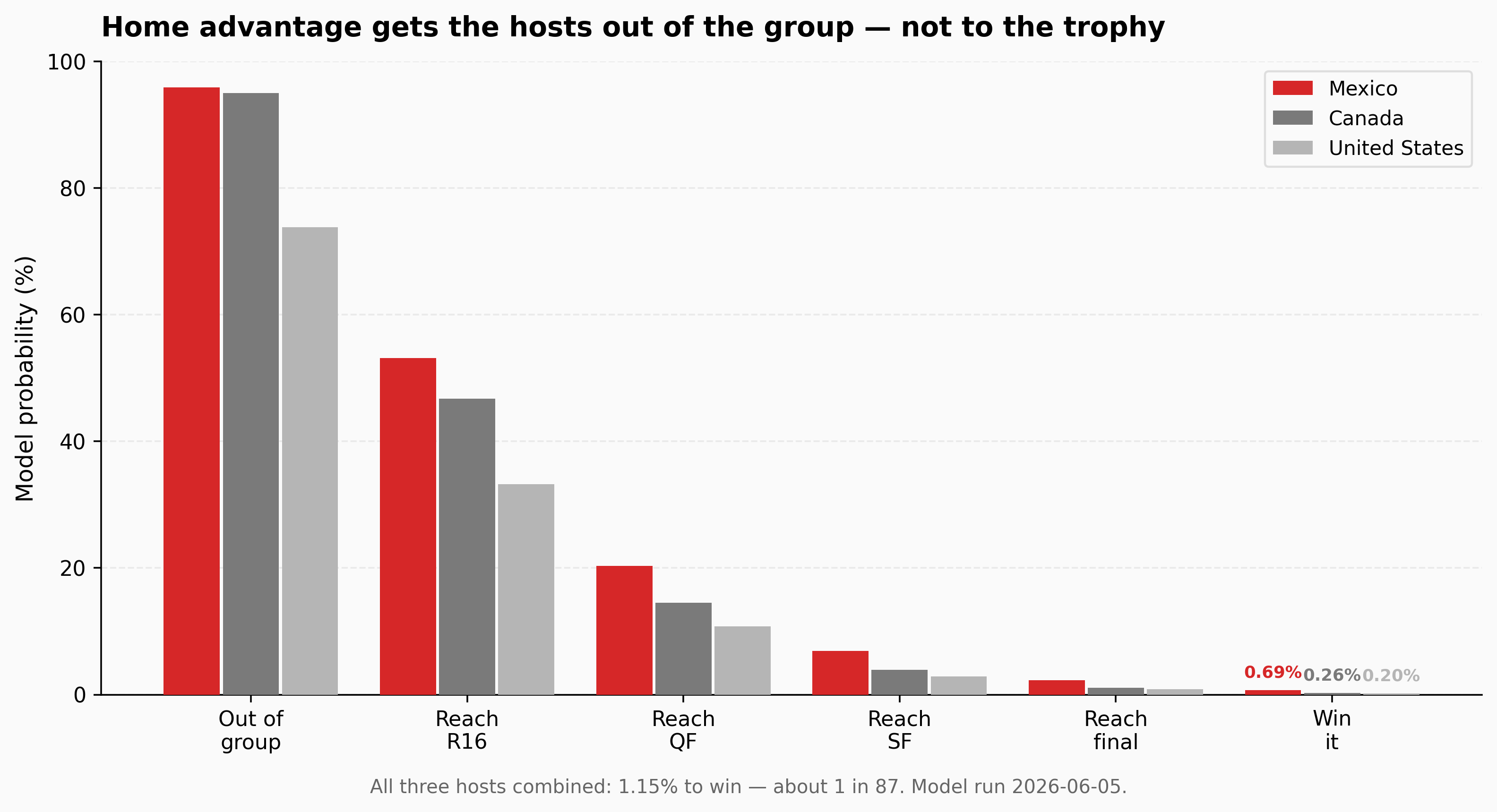
The three hosts have a combined 1.2% chance of winning their own World Cup
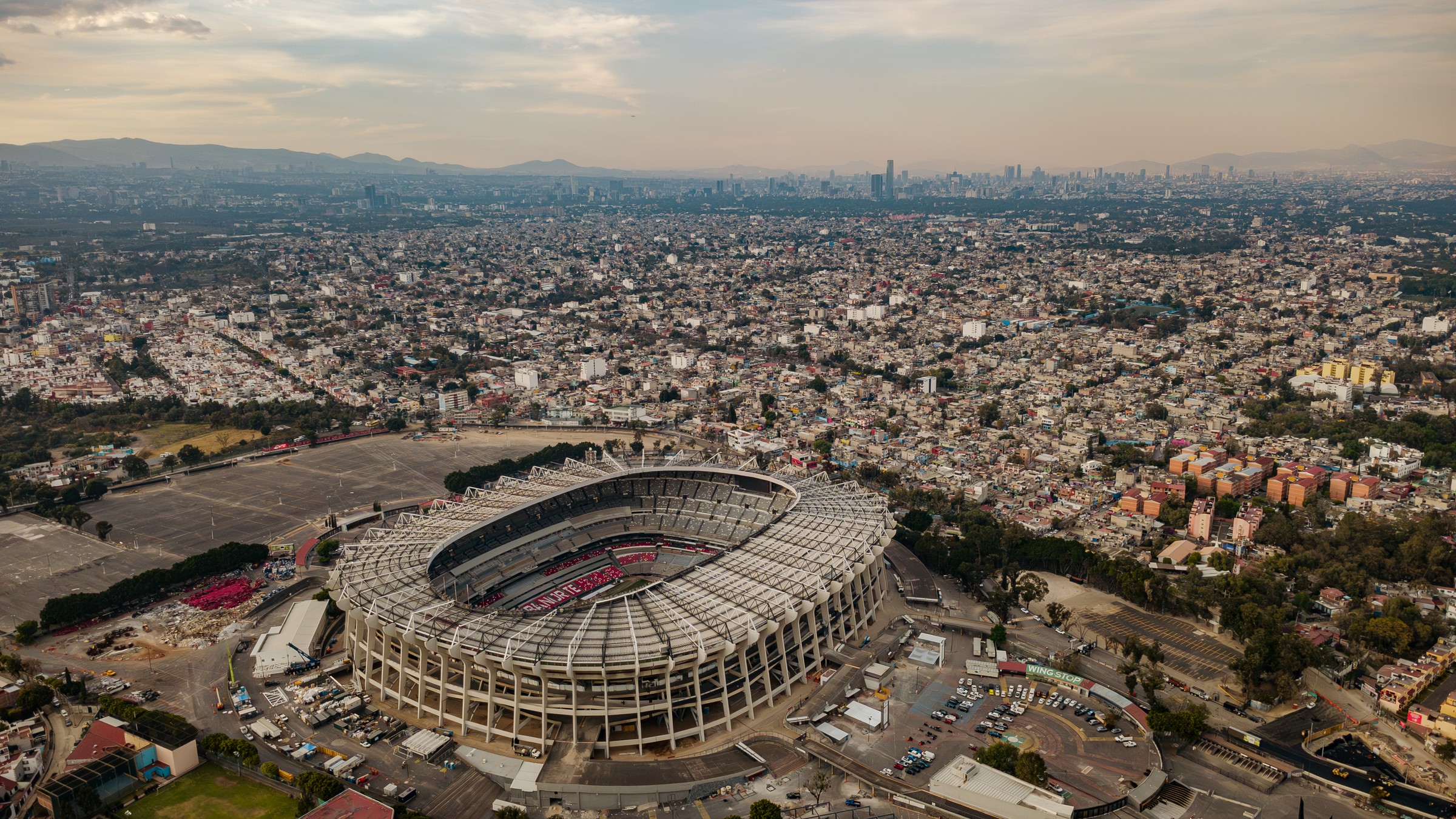
The 2026 World Cup opens June 11 at the Estadio Azteca, where Mexico plays the first match of a tournament its country is co-hosting. The model gives Mexico, Canada and the United States, added together, about a 1.2% chance that one of them lifts the trophy — roughly 1 in 87. The host advantage is real but it lives in the group stage, not the final.
#world-cup-2026#hosts#mexico#usa
6 Jun 2026
Set-piece teams and open-play teams: where the contenders actually score
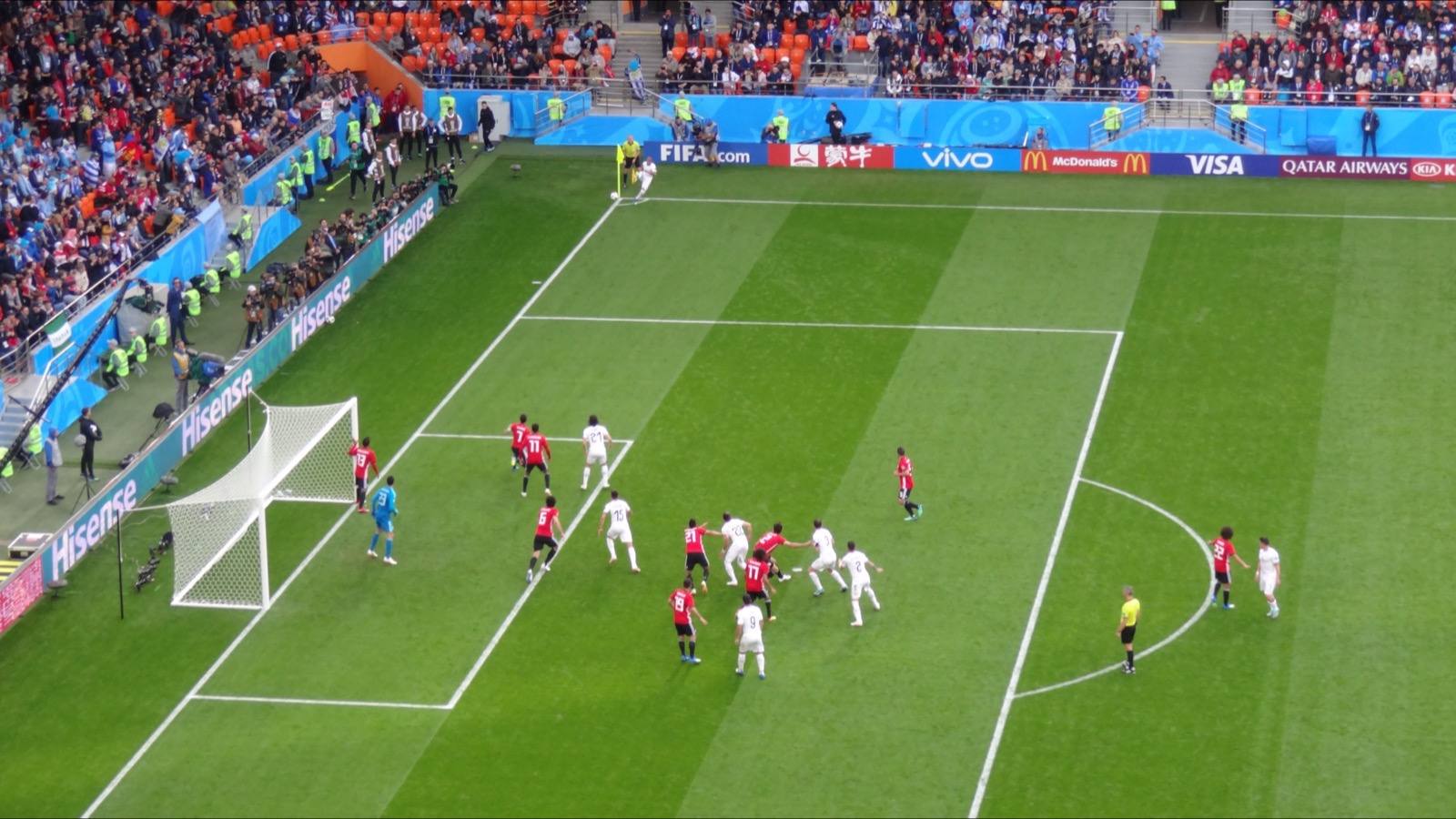
Not every team scores the same way. We took every shot from the last three major-tournament cycles (World Cups, Euros, Copa América, the Africa Cup of Nations) and sorted every goal by how the move began, into open play, set pieces, counters, and penalties. The split is wide. Uruguay scores 58% of its goals from set pieces, the most of any well-sampled qualifier; Spain and Germany take two of every three from open play. How a team defends set pieces is its own story. The Netherlands, Morocco, and Brazil each concede close to half their goals from dead-ball situations. A guide to how the World Cup's contenders actually put the ball in the net, and how they let it in.
#world-cup-2026#set-pieces#open-play#tactics
2 Jun 2026
The conditions draw: who got the altitude, who got the heat
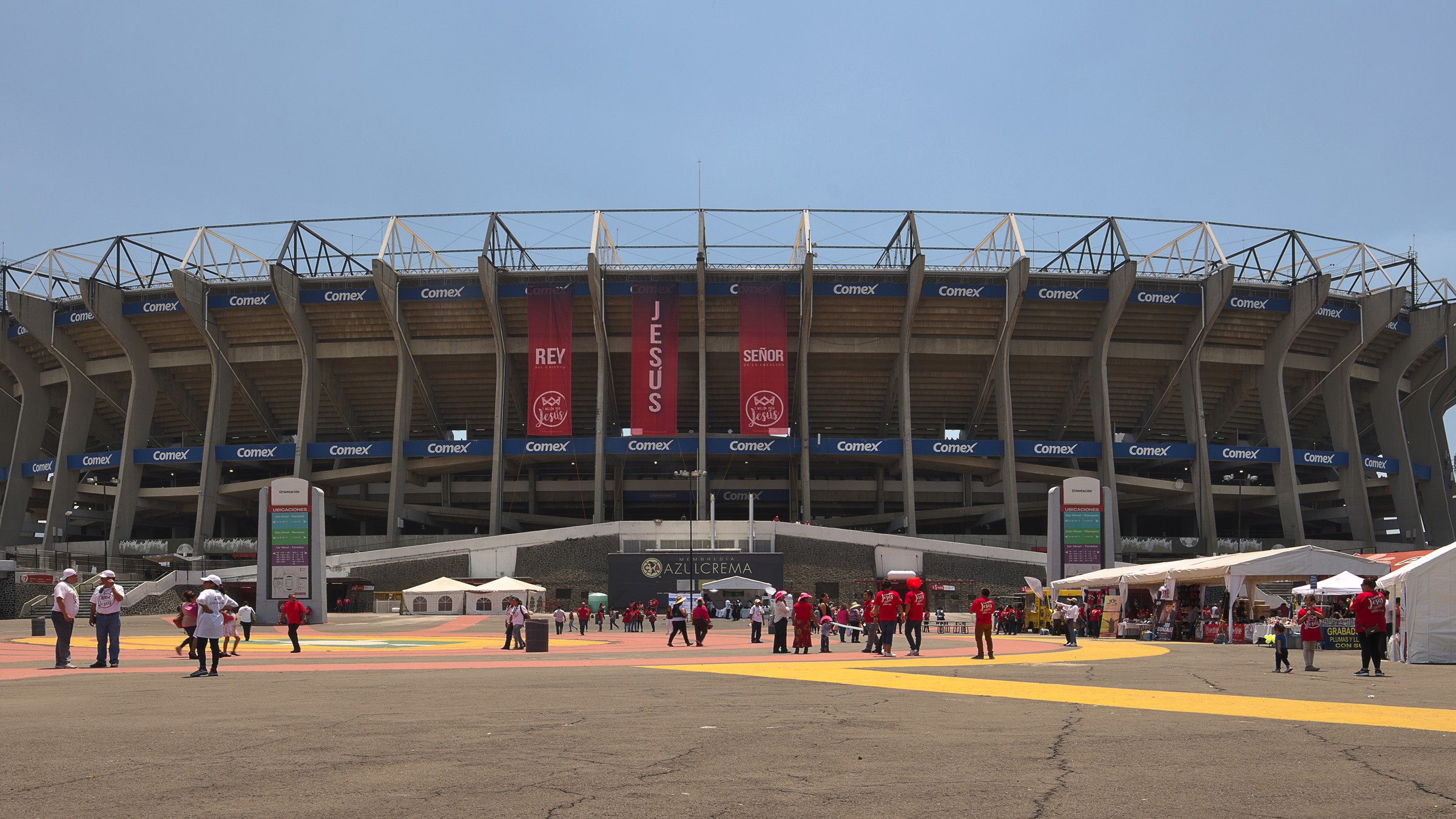
The 2026 World Cup is the first to mix the thin air of Mexico City with the Gulf-coast heat of the American South in one tournament. But altitude and humidity don't punish everyone equally — they tax the teams whose players never train in them and barely touch the teams who do. Mexico, Colombia, and South Africa drew altitude they're built for; the Czech Republic, South Korea, and Uzbekistan are sea-level sides sent up high. In the heat group, the hottest draw — Japan — may be the best prepared for it, while cool-climate Sweden and the Netherlands feel it most. A venue-by-venue guide to who the conditions draw quietly helped, and who it taxed.
#world-cup-2026#conditions#altitude#weather
2 Jun 2026
Five projected starting captains at WC2026 are 35 or older
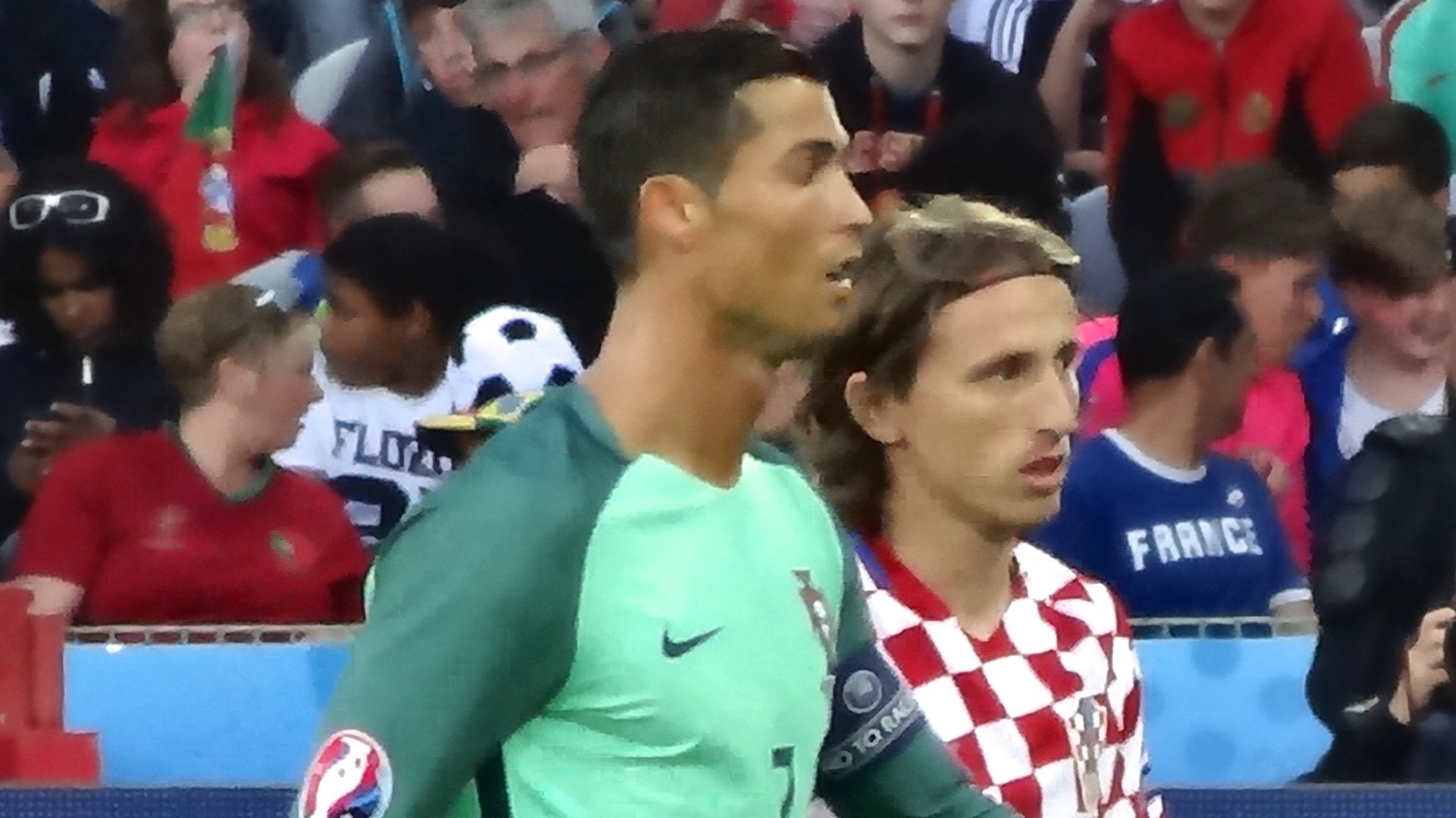
Cristiano Ronaldo, Luka Modrić, Edin Dzeko, Lionel Messi, and Riyad Mahrez are all projected to start as captains in their opening match. The youngest is 35. The oldest is 41. WC2030 starts in summer 2030, four years from now, when each of them is between 39 and 45. For most of them, this is the last World Cup.
#veterans#captains#last-dance#ronaldo

2 Jun 2026
The 2026 map punishes some teams more than others
The first 48-team World Cup is also the first spread across three countries and four time zones. That geography lands unevenly. We measured the in-tournament travel each team faces in the group stage — the distance between their three assigned venues. Bosnia and Herzegovina drew the longest internal itinerary at roughly 5,060 km, Toronto to Los Angeles to Seattle. Argentina, the model's favourite, drew one of the shortest at about 740 km. The flight maps behind the draw, and why the host nations are not all spared.
#world-cup-2026#travel#schedule#venues
30 May 2026
France will have six players in the final — on both benches
Six France internationals start tonight's Champions League final, five for PSG and one for Arsenal — Ousmane Dembélé against William Saliba, club rivals who become teammates in 12 days. The model has France 9.1% to win the World Cup, and rates Dembélé its #28 tournament scorer.
#france#world-cup#ucl#psg

30 May 2026
Portugal's World Cup spine plays the Champions League final tonight
Four of PSG's starters in tonight's Champions League final — Vitinha, João Neves, Nuno Mendes and Gonçalo Ramos — are bound for Portugal at the World Cup. The model gives Portugal a 9.0% chance to win the tournament, and rates Gonçalo Ramos its #21 tournament scorer.
#portugal#world-cup#ucl#psg
30 May 2026
PSG vs Arsenal: what the model sees in the Champions League final
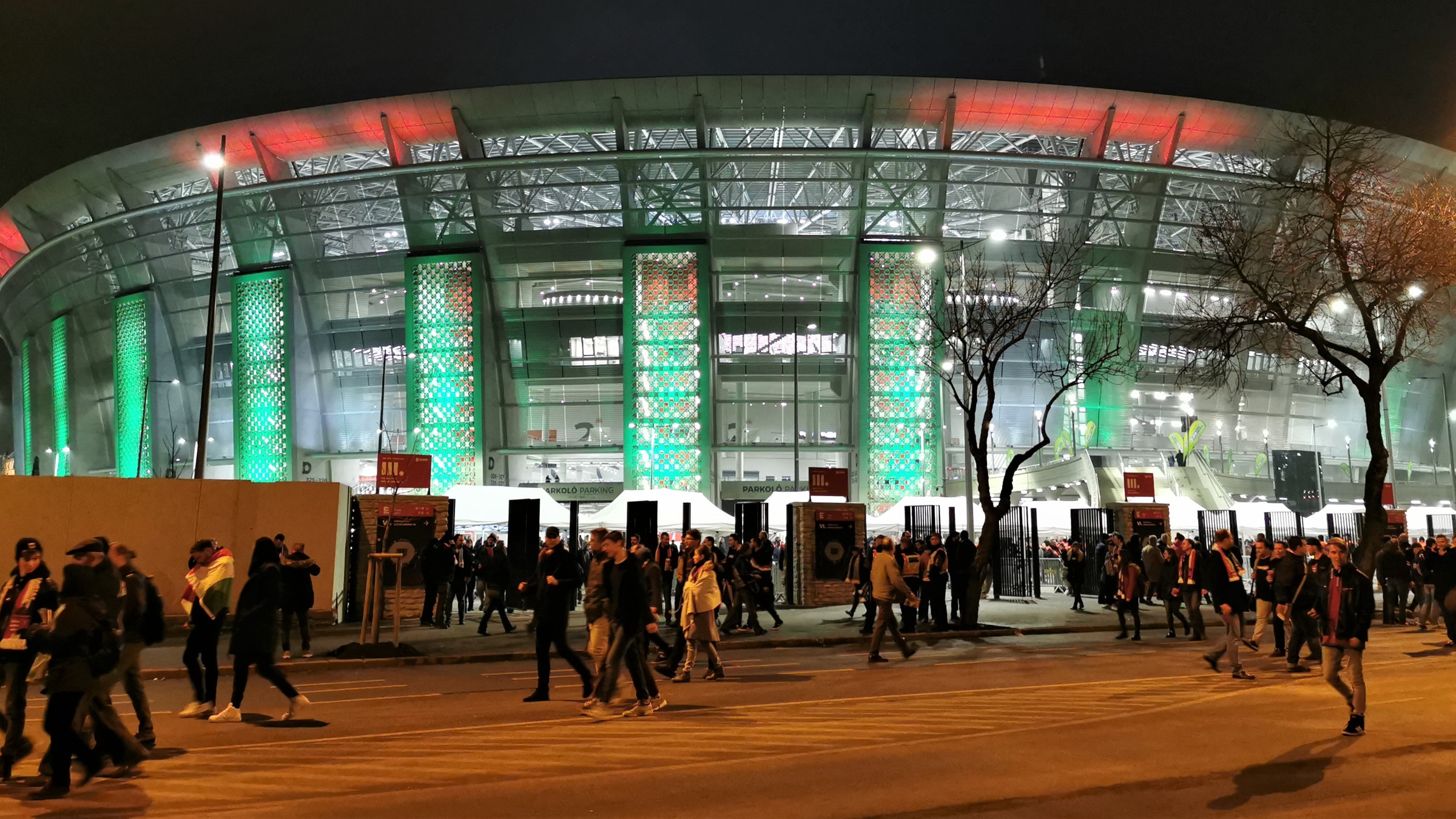
Our club-football model makes Arsenal clear favourites in tonight's Champions League final — 54% to win, 25% draw, 21% PSG — on a ClubElo advantage of nearly 100 points and an expected-goals split of 1.73 to 0.98. The most likely scoreline is 1-1, but the distribution tilts firmly to Arsenal.
#ucl#champions-league#psg#arsenal
29 May 2026
Morgan Gibbs-White had the best season of his life. So why was he left behind?
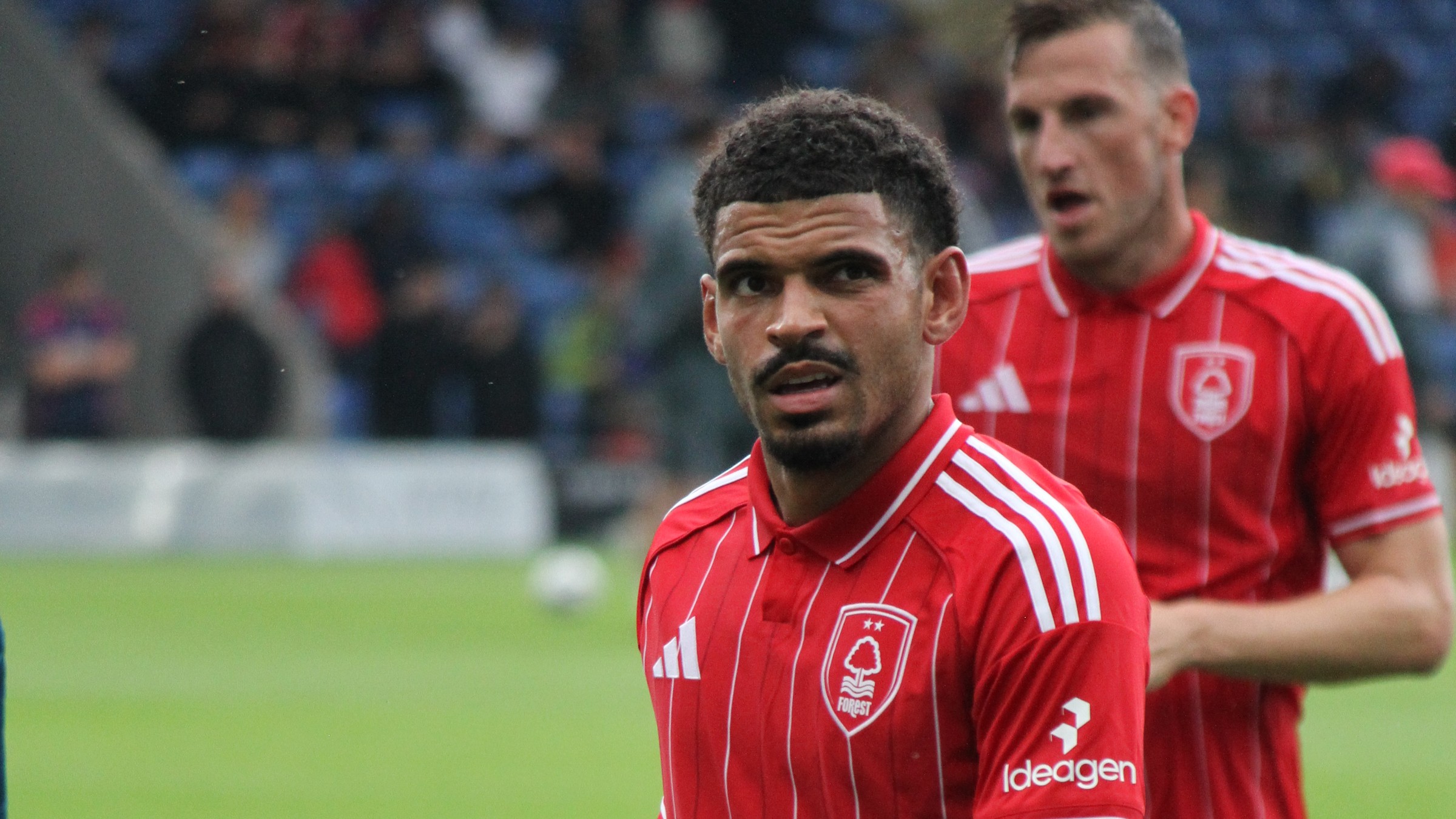
Morgan Gibbs-White had the best season of his life — 15 goals, Forest's top scorer, a European semi-final — and England still left him behind. The outrage went to Palmer and Foden instead, both off down years. Our model rates Gibbs-White ninth among England-eligible players, and of everyone left out, his is the case that's hardest to argue with.
#england#squad#omissions#gibbs-white
28 May 2026
Model notes — how onthepitch predicts the 2026 World Cup
A complete reference for the prediction system behind onthepitch. Three component models (Elo, Dixon-Coles, Hierarchical Poisson), a calibrated ensemble, and a Monte Carlo bracket simulator. Every parameter, every design choice, every backtest number — in one place.
#methodology#model#ensemble#calibration
28 May 2026
Eight Barcelona players in Spain's squad — what club concentration means at a World Cup
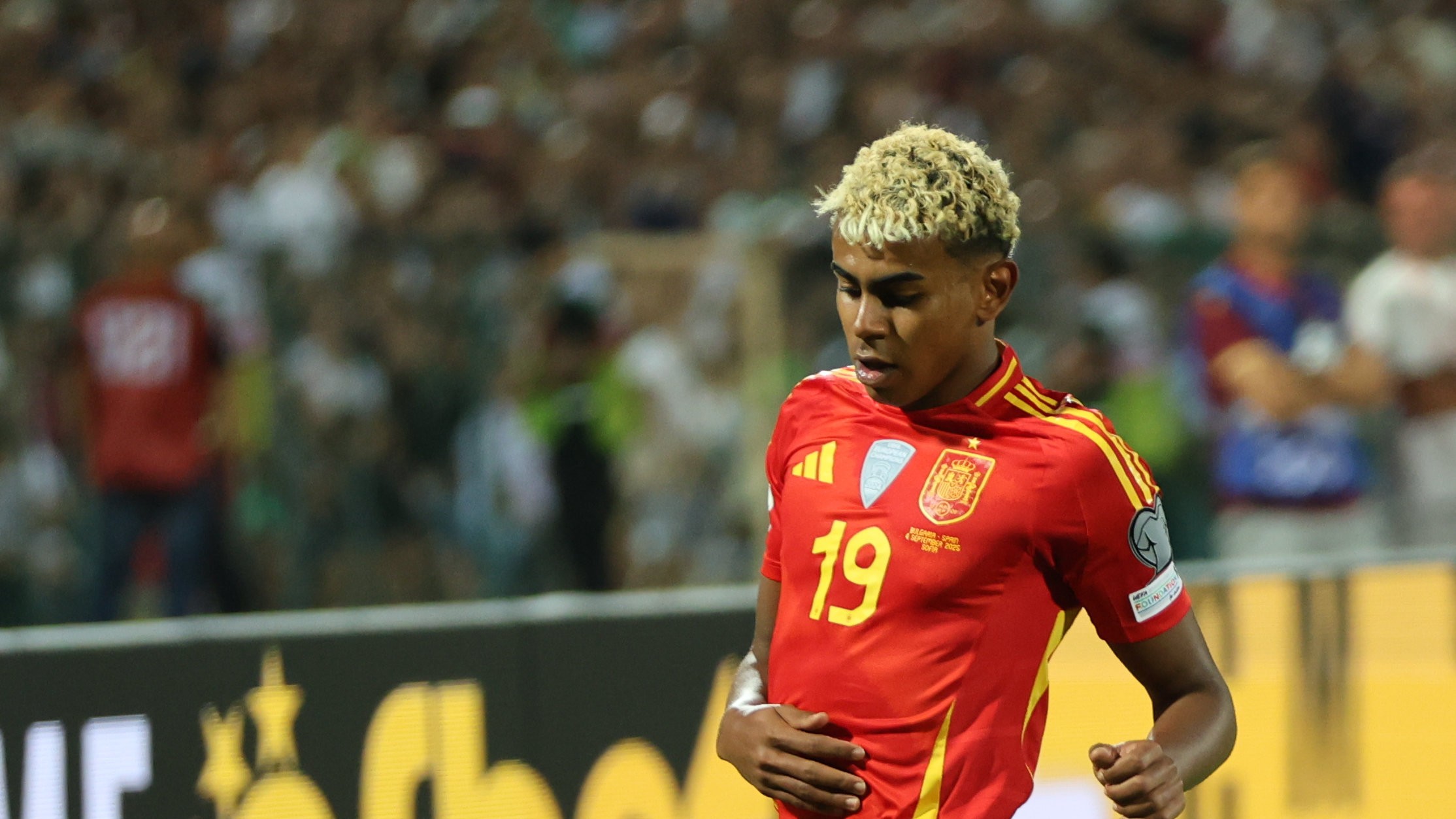
Spain's 2026 World Cup squad has eight Barcelona players out of 26 — among the heaviest single-club blocs in the 48-team field, and the largest from a Champions League club. Players who share a club share passing patterns, spatial habits, and a tactical language that doesn't need to be rebuilt in a two-week camp. Our model rates Spain as the tournament's most likely winner at 17.0%.
#spain#world-cup-2026#squad#squad-cohesion
28 May 2026
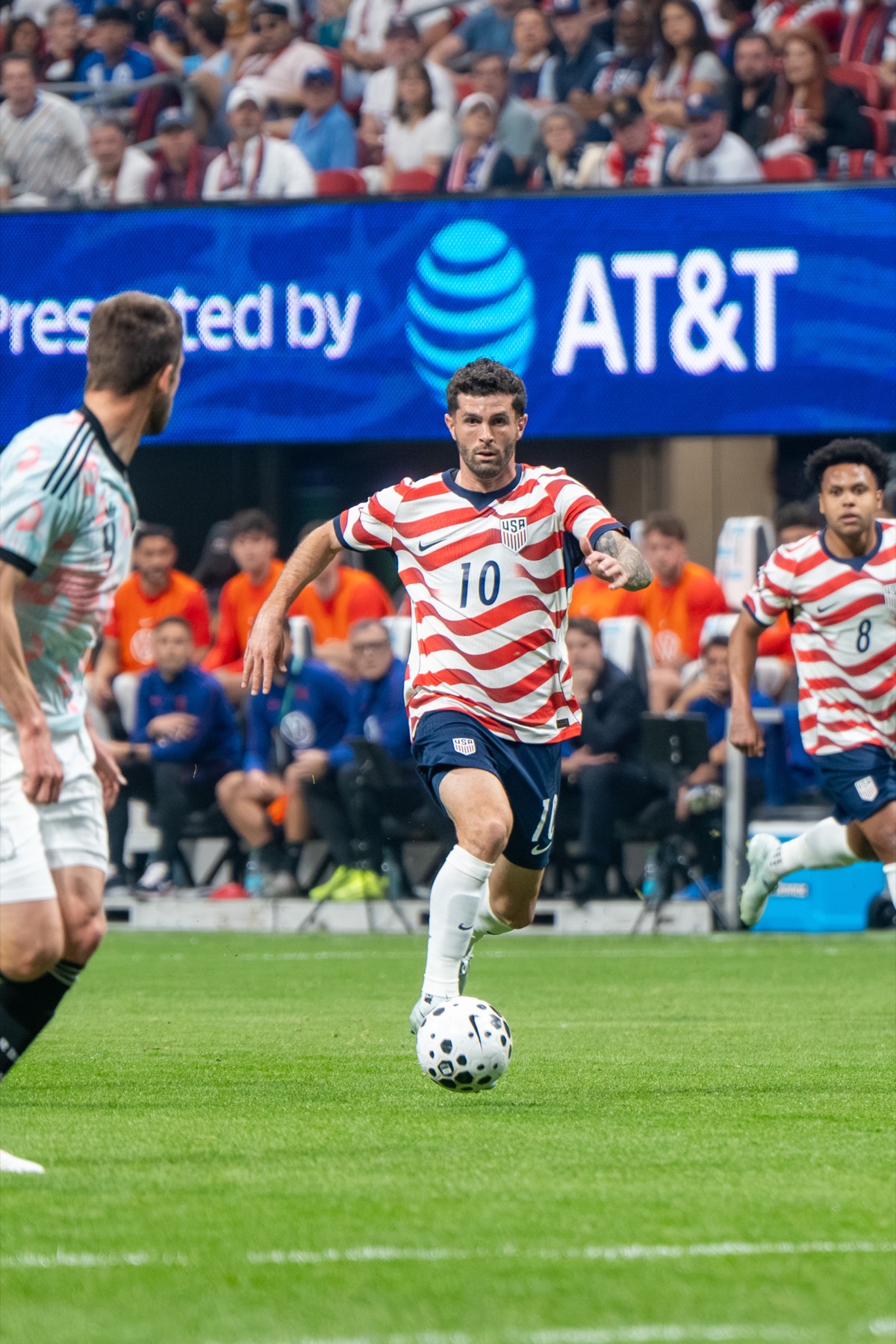
The USA is the underdog in every group match at their own World Cup
Group D is the most competitive group at the 2026 World Cup by a massive margin. Our model gives the USA just a 78.3% chance of advancing — the lowest of any host nation — and rates them as the underdog in all three group matches. No other group in the 48-team field comes close to this level of uncertainty.
#usa#world-cup-2026#group-d#turkey
28 May 2026
Ten ideas the model tried and rejected
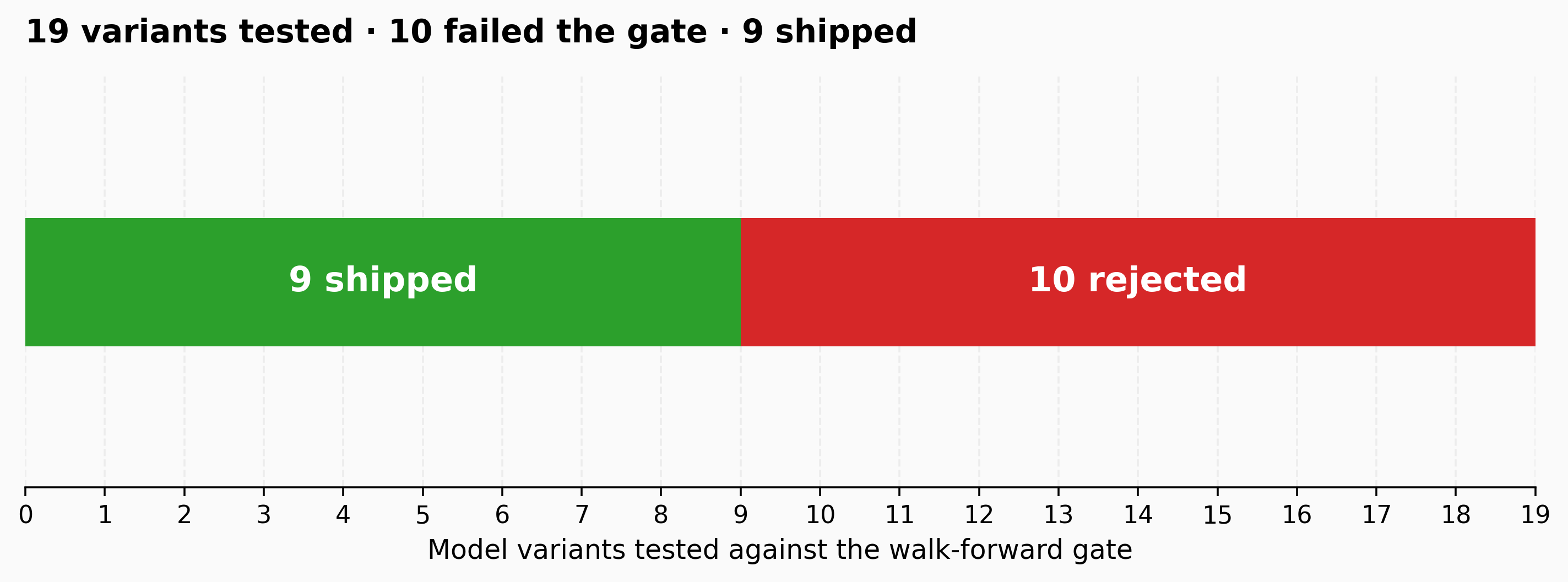
We tested 19 model variants before settling on the current ensemble. Ten of them failed the walk-forward Brier + ECE gate and were not shipped. Here's every hypothesis, every test result, and every reason for the no-ship — because the ideas you don't use say as much about a model as the ones you do.
#methodology#negative-results#model#calibration
25 May 2026
Three numbers for the same question: how accurate is the model on tournaments?
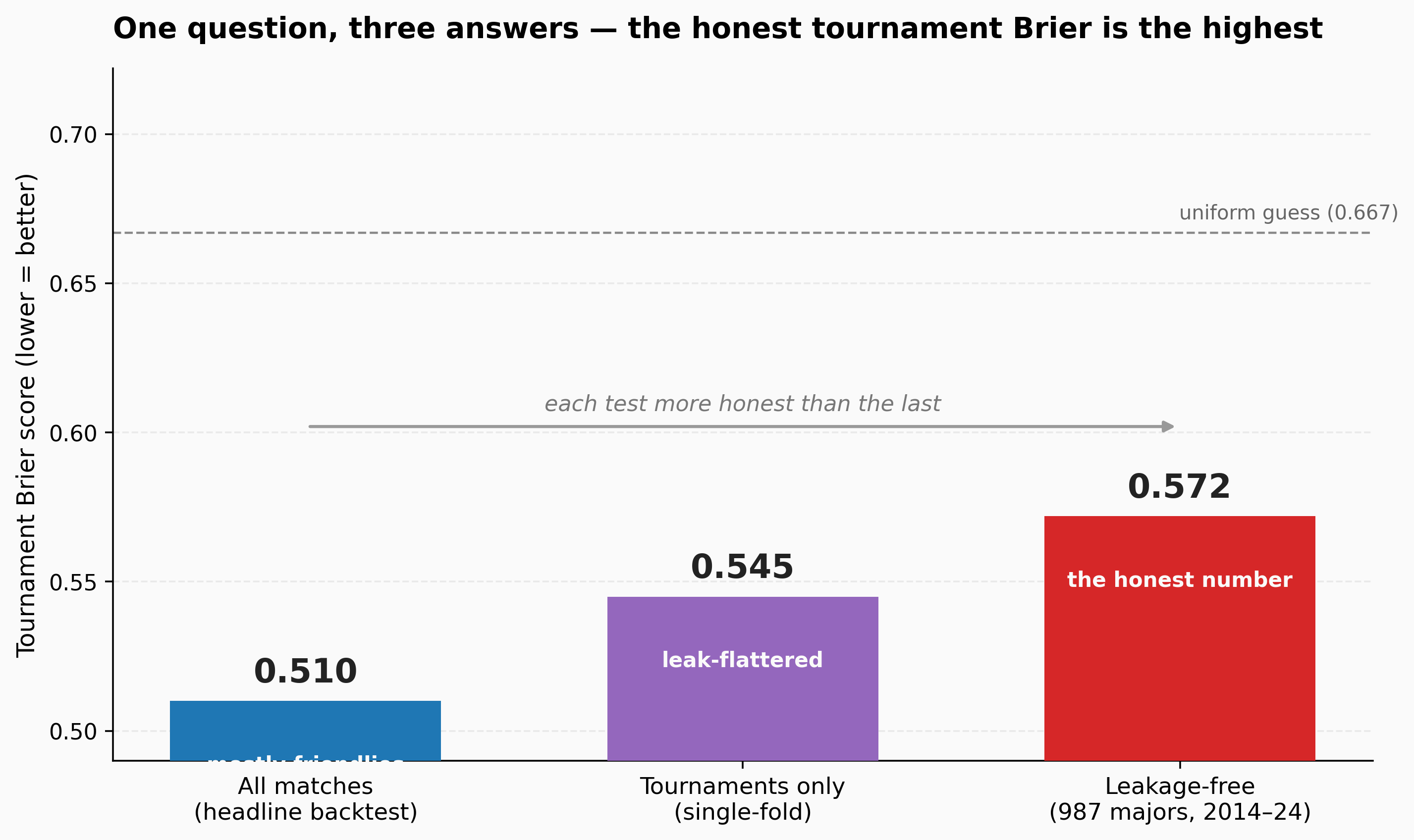
We answered one question — how well does the model predict tournament matches? — three times, and got a worse answer each time we made the test more honest. 0.510 on the headline backtest, 0.545 once we sliced to tournaments only, and 0.572 once we removed a subtle data leak and rebuilt every tournament from 2014 to 2024 as it stood the day before kickoff. 0.572 is the honest expectation for WC 2026.
#methodology#calibration#brier#backtest