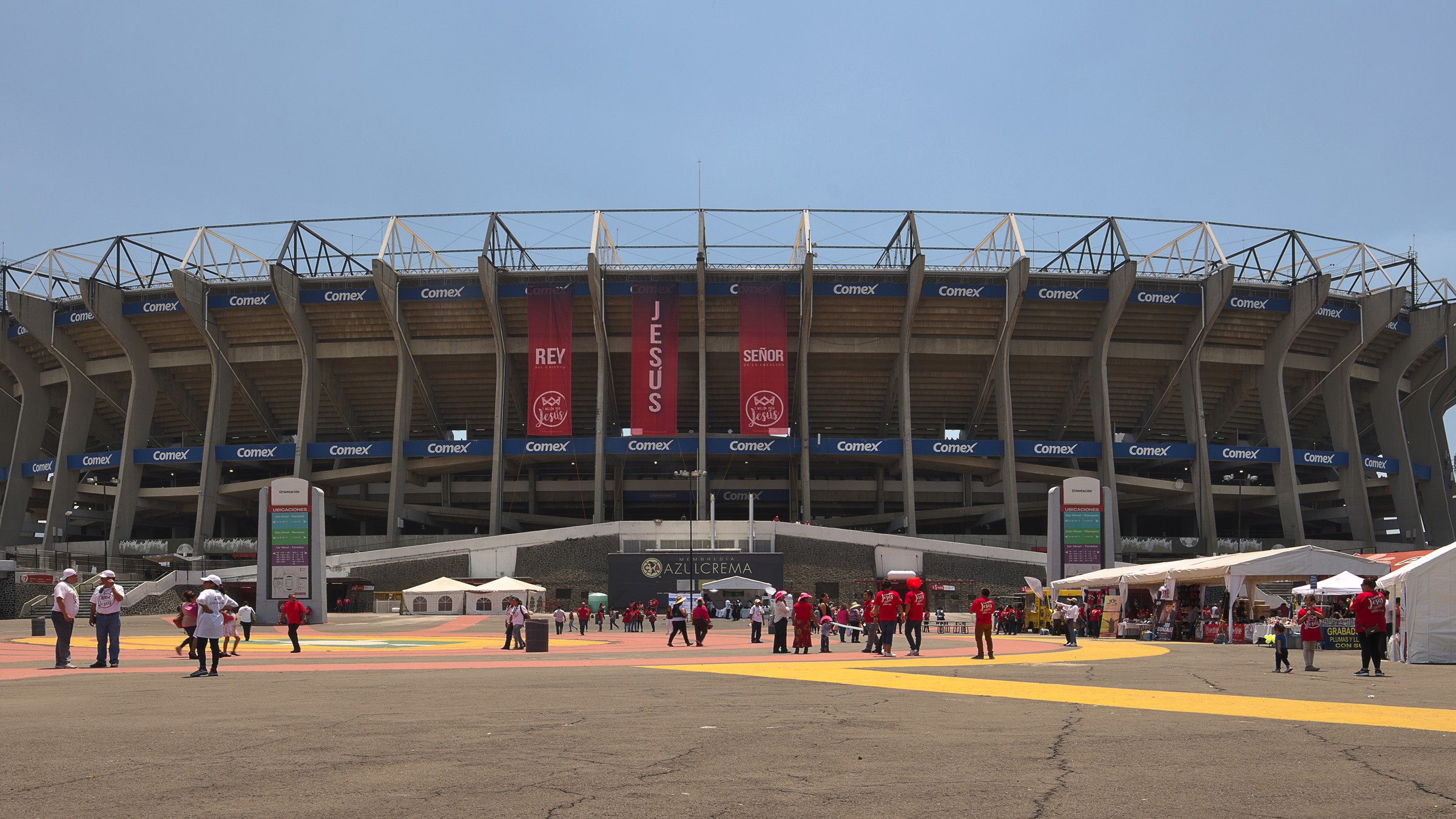
The 2026 World Cup is the first tournament to hold matches at 2,240 metres of elevation and in 29°C heat within the same group stage. Sixteen venues spread across Mexico, the United States, and Canada cover a wider range of physical conditions than any World Cup before it. We took every group-stage fixture, matched it to its stadium, and attached two numbers to each: the venue's elevation, and its average temperature and humidity for June over the last five years.
Two groups drew the extremes — Group A got the altitude, Group F got the heat. But the draw doesn't punish everyone equally. Thin air and Gulf-coast humidity hurt the teams whose players never train in them, and barely touch the teams who do. So the interesting question isn't which venues are hardest. It's which squads the draw quietly helped, and which it taxed.
Why thin air and heat actually swing matches
Start with the mechanism, because it decides who wins and who loses. Above roughly 1,500 metres the air carries less oxygen per breath, and aerobic capacity falls measurably with every additional 1,000 metres of elevation. Endurance work suffers first: the repeated high-intensity sprints that modern pressing is built on are exactly what the thin air taxes. Heat does its damage differently — high temperature plus humidity stops the body shedding heat through sweat, so core temperature climbs, the heart works harder to cool the skin, and pace drops. FIFA mandates cooling breaks once a heat threshold is crossed.
The decisive words in both cases are not acclimatised. A squad whose players spend their seasons at altitude, or through humid summers, arrives adapted. A squad parachuted in from sea level or a cool climate does not, and a two-week camp is not enough to close the gap. That is why the same venue can be a home comfort for one team and a wall for the next. The 2026 draw sorted teams onto both sides of that line.
The altitude winners
Three teams drew altitude and are built for it.
Mexico got the biggest gift. The hosts have two of their three group games at Estadio Azteca, 2,240 metres above sea level — the stadium where their players already turn out for club and country. Their three venues average 2,015 metres, the heaviest altitude load in the field, and every metre of it favours them. Visitors to the Azteca have laboured there for decades; Mexico simply goes to work. The model gives them a 96% chance to reach the knockout rounds.
Colombia are the draw's quiet winner. Their footballing home, Bogotá, sits above 2,600 metres, among the highest top-flight environments in the world game. The draw then handed them two of the tournament's three altitude games: an opener at the Azteca (2,240m) and a second match in Guadalajara (1,565m). They are as acclimatised as anyone in the field, and they get to use it. The model rates Colombia at 4.2% to win the tournament and 92.2% to advance — comfortably the strongest of the altitude-adapted sides after the hosts.
South Africa belong here by geography: their domestic game is played on the Highveld around Johannesburg, near 1,750 metres, and they open at the Azteca. The catch is that the model gives them only a 25% chance to advance from a tough Group A. The adaptation is real; the team may not be good enough to cash it in.
The altitude losers
Three sea-level squads got sent up high — and all three are in Group A, which is where Mexico's home-altitude advantage bites hardest.
The Czech Republic drew the worst of it. Prague is a lowland city, and the draw routes them through both of Mexico's high venues — Guadalajara (1,565m), then, after a stop in Atlanta, Mexico City (2,240m). Their three-venue average of 1,375 metres is the second-highest of any team, behind only the acclimatised hosts. The model still likes them to advance (75%), but the schedule asks their legs a question a flatter draw would not — and one of those questions is a trip to the Azteca itself, at altitude, in front of a home crowd.
South Korea face two matches in Guadalajara at 1,565 metres. Seoul is near sea level, and the K-League and European clubs that supply the squad are all at low elevation; the back half of those games up high is where a tight match can slip. The model gives them a 76% chance to advance.
Uzbekistan, at their first ever World Cup, open against the worst of it: their tournament begins at the Azteca, 2,240 metres, before they descend to Houston and Atlanta. For debutants the model puts at 31.8% to advance, drawing the single hardest venue in the tournament for game one is a brutal welcome.
The heat group: who wilts, who's built for it
Group F is the heat group — but the hottest draw is not the worst-hit, and the gap between those two things is the whole point.
Japan drew the single hottest schedule in the field: two games in Dallas, one in Monterrey, a three-venue average of 28.8°C. Yet Japanese summers are themselves hot and humid, and the squad is used to playing through them. Of the four teams in Group F, Japan may be the best equipped for the conditions it drew. The model has them 78.1% to advance.
The teams the heat genuinely threatens are the cool-climate ones beside them. Sweden average 28.5°C across Monterrey, Houston, and Dallas — a Nordic side dropped into the Gulf-coast summer, with a 58% advancement chance the conditions do nothing to help.
Netherlands average 27.9°C across Dallas, Houston, and Kansas City; the model still makes them 91.4% to advance, but a humid afternoon in Houston blunts exactly the high-tempo pressing their game is built on.
The heat is a smaller story for the sides that come from it — Saudi Arabia, Tunisia, Egypt, Mexico — who arrive built for the conditions. The most humid single path belongs to Portugal: Houston, Houston, then Miami, at 79% mean humidity, the highest of any team.
Even the contenders weren't spared. Argentina, the model's second-favourite at 15.8% to win, drew two games in Dallas and one in Kansas City at a 28.2°C average. Iberian and South American summers run hot, though, and Gulf-coast humidity is a different test from dry heat — the discomfort is real, the disadvantage smaller than it is for the Nordic sides.
The double burden
A couple of teams drew a hard conditions profile and a punishing travel schedule. The Czech Republic is the clearest: the second-highest elevation average in the field, paired with one of the longest internal flight maps of the group stage. South Africa open at altitude in Mexico City, then crisscross the continent. We map the travel side of the 2026 draw in a companion post — the teams the map punishes.
What the model sees, and what it doesn't
Our model is team-level and results-driven. It scores each team on the outcomes of the matches it has actually played, then projects those forward through the bracket. It does not contain an explicit "altitude penalty" or "heat penalty" term. There is no dial in the model that reads a venue's elevation and docks a team a percentage point.
That does not mean conditions are entirely invisible to it. Mexico's record was built at altitude, so the model has absorbed whatever that elevation does for them. A team that has historically played well in heat carries that into its rating. What the model cannot do is reason about a novel pairing: it has no way to know that this particular Czech squad will compete at 2,240 metres in a fixture its training data never contained. Conditions enter the model only to the extent they already shaped the results it learned from.
So treat the numbers in this post as context the model does not price directly. The win and advancement probabilities come from the team ratings. The elevation and climate figures come from the venue assignments. Where the two pull in the same direction, as with Mexico at altitude, the model and the conditions agree. Where they pull apart, the conditions are a risk the headline probability does not show.
A note on the climate figures
Every temperature and humidity number here is a five-year historical average for June at that venue, drawn from open meteorological archives. They describe the climate a team is likely to meet, not a forecast for any specific match. A given afternoon can run hotter or cooler. What the averages capture well is the relative draw: which squads face systematically tougher conditions across all three group games, and which drew the temperate northern venues in Vancouver, Seattle, and Boston.
Where to read more
The full 48-team winner table and every group's probabilities are on the tournament dashboard. Each venue's details sit on the individual match pages. The methodology is at /docs/methodology/.
All probabilities in this post are model outputs as of the latest snapshot. They are for research and educational purposes only — not betting advice, not financial advice, not recommendations to gamble. The model can be wrong. Methodology: /docs/methodology/. Full Terms of Use.