Sweden scored five on Matchday 1. Netherlands scored five on Matchday 2. The preview reel said "still underdogs." The model called it at 61% and the result proved why: Matchday 1 goals against weak opposition do not transfer.
June 20: the scorecard
| Match | Result | P(result) | Brier |
|---|---|---|---|
| Netherlands vs Sweden | 5-1 | 61.2% | 0.229 |
| Germany vs Ivory Coast | 2-1 | 63.6% | 0.203 |
| Curacao vs Ecuador | 0-0 | 15.0% | 1.397 |
| Japan vs Tunisia | 1-0 | 56.3% | 0.294 |
Mean Brier: 0.531. Three correct calls and one historic miss.
Netherlands 5-1 Sweden: the reversal
Sweden scored five against Tunisia on Matchday 1. The preview reel asked "five goals, still underdogs?" The model said 61% Netherlands, 16% Sweden. Five goals against the weakest team in the group, the model argued, do not change the underlying quality gap.
Netherlands proved the model right in the most emphatic way possible. Five goals. The exact number Sweden scored. One matchday apart.
Alexander Isak scored five on Matchday 1 and watched his team concede five on Matchday 2. Virgil van Dijk's Netherlands were clinical: the Elo gap (Netherlands 1986 vs Sweden 1791) was the real signal, not the Tunisia result.
Brier: 0.229. A clean win for the model. Group F now has a clear hierarchy: Netherlands sit on 4 points, Japan on 4, Sweden on 3, Tunisia on 0. The final matchday will decide who advances.
Germany 2-1 Ivory Coast: seven down to two
Germany scored seven against Curacao on Matchday 1. Against Ivory Coast, ranked 46th, they needed just two. The model had Germany at 63.6% and the result validated the thesis: the seven-goal demolition was noise. The competitive result was a narrow 2-1 win against a side that beat Ecuador on Matchday 1.
Ivory Coast proved they belong. Their 1-0 win over rank-9 Ecuador on Matchday 1 was not a fluke. They pushed Germany, and the 2-1 scoreline reflects a genuine contest, not the mismatch the rankings suggested.
Brier: 0.203. The model's best single-match score of the day and one of the best of the tournament. Germany top Group E with 6 points. Ivory Coast sit on 3. The group is alive.
Curacao 0-0 Ecuador: the model's worst miss
Curacao lost 1-7 to Germany on Matchday 1. Ecuador were 82.1% favourites. The model gave Curacao a 2.9% chance of winning and 15.0% chance of a draw.
Curacao held them to nothing.
Brier: 1.397. The worst single-match penalty of the entire tournament. Worse than any draw miss, worse than any upset. The model treated this as nearly automatic. The pitch disagreed completely.
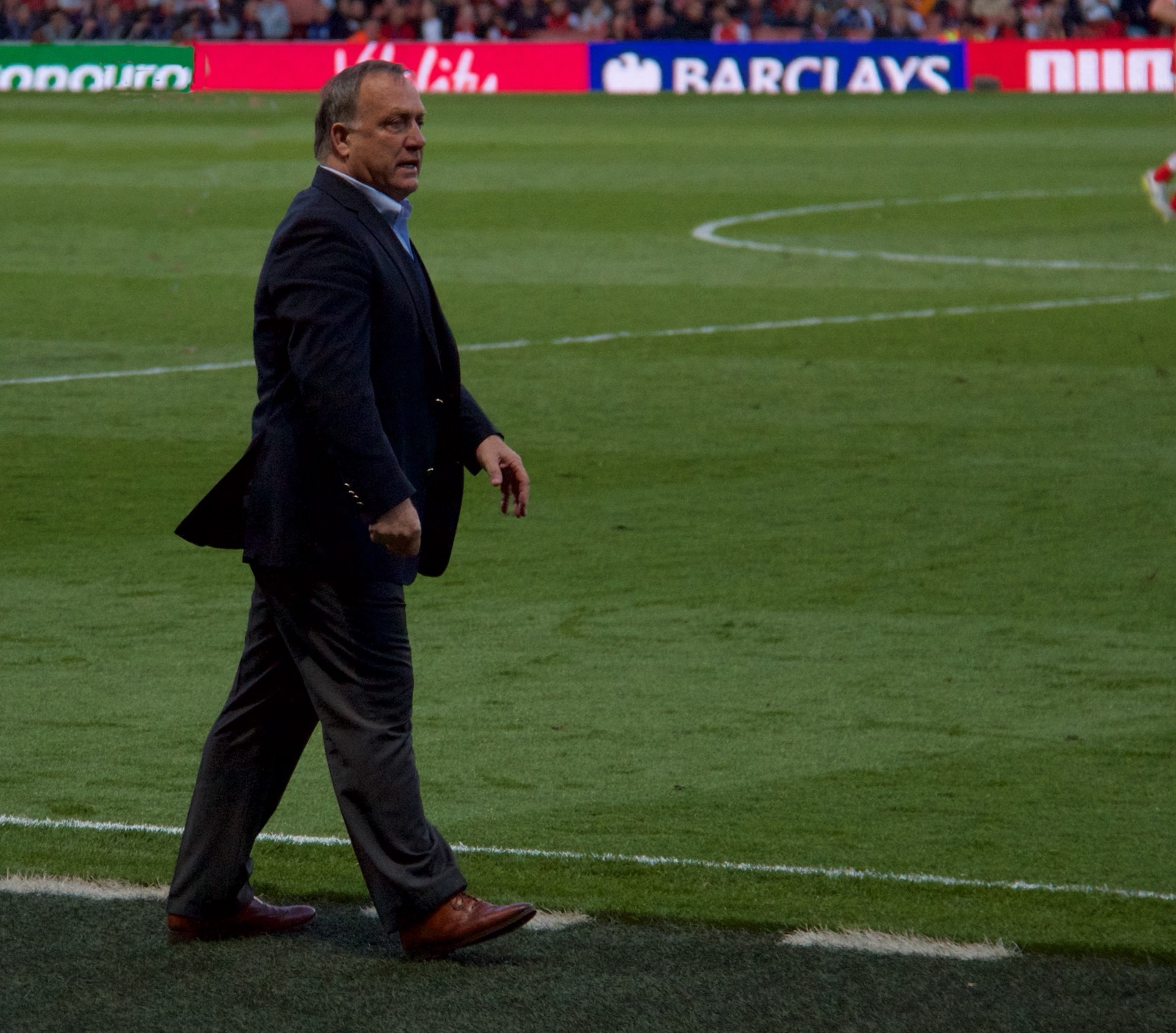
Dick Advocaat is 78 years old. He has coached the Netherlands, South Korea, Belgium, Russia, Serbia, and now Curacao. He set up a defensive shape that Ecuador could not break. Zero shots on target from an 82% favourite. That is coaching.
Curacao now have 1 point from 2 matches. Ecuador have 0 points from 2 matches. A team rated at 82% to win has zero points after two group-stage matches. The model's travel and Elo framework did not account for tactical discipline.
Japan 1-0 Tunisia: the quiet confirmation
Japan held Netherlands to 2-2 on Matchday 1. The model rated Japan at 56.3% against Tunisia, who lost 1-5 to Sweden. A comfortable favourite. Japan won 1-0.
No drama. No surprises. The model's 56.3% played out exactly as expected. Yuto Nagatomo's Japan are through to the final matchday with 4 points, level with Netherlands on goal difference.
Brier: 0.294. Solid, unremarkable, correct.
The day's lesson: Matchday 1 goals do not transfer
Three of four results went the model's way. Sweden's five goals meant nothing against Netherlands. Germany's seven goals reduced to a 2-1 win. The model's framework, Elo-based quality adjusted for travel, beat the "form" argument.
The exception was Curacao 0-0 Ecuador, where the model's Elo gap was large enough that it ignored the tactical possibility of a shutdown. A model that treats teams as quality distributions will always struggle with a 78-year-old coach who tells his players to defend for 90 minutes.
June 21: the draw groups
Groups G and H return for Matchday 2. Here is the context that makes today's card unusual: every Matchday 1 match in these two groups was a draw. Four matches, four draws, zero wins.
| Matchday 1 | Group | Result |
|---|---|---|
| Belgium vs Egypt | G | 1-1 |
| Iran vs New Zealand | G | 2-2 |
| Spain vs Cape Verde | H | 0-0 |
| Saudi Arabia vs Uruguay | H | 1-1 |
Eight teams played. Nobody won. Now they try again.
| Match | Group | Model H/D/A | MD1 shift |
|---|---|---|---|
| Spain vs Saudi Arabia | H | 84.9 / 12.6 / 2.5 | down 3 (was 87.6) |
| Cape Verde vs Uruguay | H | 5.8 / 21.4 / 72.8 | — |
| Belgium vs Iran | G | 53.7 / 24.8 / 21.5 | down 6 (was 60.4) |
| Egypt vs New Zealand | G | 53.6 / 28.4 / 18.0 | — |
The model's reaction to four draws: Belgium dropped six percentage points. Spain dropped three. The model barely moved.
Spain vs Saudi Arabia: three points, and they don't mean what you think
Spain were 87.6% against Cape Verde. They drew 0-0. The model's reaction: 84.9% against Saudi Arabia. Three percentage points.
That three-point drop tells you everything about how this model thinks. A goalless draw against an island nation of 600,000 people, and the model treated it as noise. Not because the model ignores results. Belgium drew 1-1 with Egypt and dropped six points, from 60.4% to 53.7%. The model adjusts. It just adjusts more for some teams than others.
Spain's Elo sits at 2093, 170 points above Saudi Arabia's 1923. Cape Verde's Elo is 1467. The model thinks the quality gap between Spain and any opponent on today's card is large enough that a single 0-0 draw tells you almost nothing useful about what Spain will do next. A 170-point Elo advantage absorbs one bad result without flinching.
Lamine Yamal leads the attack. Saudi Arabia drew 1-1 with Uruguay on Matchday 1, a creditable result, but Uruguay (Elo 1894) are 29 points below Saudi Arabia's own rating. The model expects Spain to score today. Whether it is right depends on whether the 0-0 against Cape Verde was a fluke or a warning.
Cape Verde vs Uruguay: they held Spain
Cape Verde held 88% Spain to nothing. Now they face 73% Uruguay. The model gives them 6%.
That 6% is the story Cape Verde's fans are living right now. They are the smallest nation in the tournament by population. They qualified through a path nobody predicted. They drew the defending European champions. And the model's response is: 6% against Uruguay. Not even close.
Uruguay drew 1-1 with Saudi Arabia on Matchday 1. Fernando Muslera is 40 years old, still starting in a World Cup. Uruguay's Elo (1894) is 427 points above Cape Verde's (1467). The model sees this as one of the most lopsided matchups on the card.
But Cape Verde just proved that 88% does not mean automatic. Dick Advocaat's Curacao proved the same thing yesterday (0-0 against 82% Ecuador). Small nations with disciplined coaches can shut down the model's assumptions for 90 minutes. Whether they can do it twice in a row, against different opposition, is the question.
Belgium vs Iran: the six-point drop
Belgium were 60.4% against Egypt. Drew 1-1. Now 53.7% against Iran. Six percentage points.
Compare that to Spain: Spain dropped three points after a 0-0. Belgium dropped six after a 1-1. The model penalizes Belgium more because Belgium's Elo (1891) gives them less margin. Spain at 2093 can absorb a draw. Belgium at 1891 cannot.
Kevin De Bruyne's Belgium have not won a World Cup match yet. Iran drew 2-2 with New Zealand on Matchday 1, a match where Iran led twice and conceded twice. Mehdi Taremi leads Iran's attack. The model sees this as close to a three-way split: 54% Belgium, 25% draw, 22% Iran. Any result is plausible.
Belgium's golden generation is ageing. De Bruyne, Lukaku, Courtois. This might be the last World Cup for the core that reached the 2018 semi-final. A loss here, combined with other results, could end their tournament at the group stage.
Egypt vs New Zealand: both drew, both at 54%
Egypt held Belgium to 1-1. New Zealand held Iran to 2-2. Both teams drew bigger-rated opponents. The model rates them identically: Egypt 53.6%, New Zealand 18.0%.
Mohamed Salah leads Egypt's attack. Chris Wood leads New Zealand's. The Elo gap (Egypt 1721 vs New Zealand 1562) favours Egypt, but not dramatically. Egypt's draw against Belgium was the more impressive result by probability (Belgium were 60.4% pre-match; Iran were only 62.8% against New Zealand). The model gives Egypt credit for the tougher Matchday 1 opponent.
The draw probability is 28.4%. In a tournament running at 30.6% draws (11 from 36), that might be conservative. Two teams that both prefer to absorb and counter. Two teams that both proved on Matchday 1 that they can frustrate stronger opposition for 90 minutes.
The draw question at 36 matches
Eleven draws from 36 matches: 30.6%. The rate has declined from the 35.7% peak at 28 matches, partly because June 19 and June 20 produced zero draws from eight matches (all four June 19 results were home wins; three of four June 20 results were home wins).
The model's average predicted draw probability remains around 24%. The gap has narrowed but not closed. Today's four-match card carries an average draw probability of 21.8%, pulled down by Spain vs Saudi Arabia (12.6%) and Cape Verde vs Uruguay (21.4%). The two Group G matches sit higher: Belgium vs Iran (24.8%) and Egypt vs New Zealand (28.4%).
If the pattern holds, Groups G and H, which produced four draws from four matches on Matchday 1, will produce at least one more. Whether the model's 21.8% average or the tournament's 30.6% rate is the better guide remains the open question.
Calibration through 36 matches
Running mean Brier: 0.598. Uniform baseline: 0.667. The model continues to outperform random guessing, and the margin has improved slightly (from 0.627 at 28 matches to 0.598 at 36). The improvement came from strong days on June 19 and June 20, where the model correctly identified home-team wins and favourite wins in most matches.
The Curacao 0-0 result (Brier 1.397) is the model's worst single-match score and offsets the gains from the rest of the day. Without it, the June 20 mean Brier would have been 0.242, the best day of the tournament. With it: 0.531.
All probabilities are frozen pre-match model outputs, locked before kickoff. The model publishes probabilities, not recommendations. Methodology: /docs/methodology/. Track record: /accuracy/. Full Terms of Use.