Four matches today from Groups I and J. The model has a strong opinion on three of them, and it points in the same direction every time: favourites are overpriced, underdogs and draws are underpriced. That pattern is the story of the day.
France vs Senegal: the model's biggest contrarian call
France are the tournament's second favourite. Prediction markets price them around 65% to win this opener. The model sees 54.6%, barely better than a coin flip. That 10-point gap is the widest divergence on today's card.
The reasoning comes down to matchup. Senegal's tactical profile is transition-heavy: 46.6% possession, 7.30 yards per pass in directness, and 43.2 long balls per 90 minutes. This is a team built to sit compact, absorb pressure, and attack the space behind a high line. Against France's balanced setup (50.5% possession, PPDA 26.1), that transition game could cause real problems.
Then there is the fitness question. Kylian Mbappé is carrying a torn muscle fibre and listed as doubtful. He is a projected starter. If he plays at 80%, that is one thing. If he does not play at all, the calculation shifts further. Warren Zaïre-Emery, a depth midfielder, is also carrying a back injury. Senegal have their own concern: Kalidou Koulibaly, a projected starting defender, is doubtful with a leg injury.
The draw probability is where the model diverges most sharply. At 27.2%, it sits nearly eight percentage points above the consensus figure of roughly 19.5%. If this tournament has taught us anything through 12 matches, it is that draws keep showing up more often than anyone expected.
Iraq vs Norway: another overpriced favourite
Consensus places Norway's win probability around 75.8%. The model says 62.2%. That is a 13-point gap, the largest of the day.
Erling Haaland will command all the attention. That is fair. But the model's read on the Elo gap between these sides does not justify a nearly 76% favourite tag. Iraq are more competitive than their reputation suggests. Their balanced tactical profile (47.9% possession) shows a team comfortable with or without the ball. The model gives them 13.3%, nearly 60% more than the consensus figure of 8.4%.
Both teams have partial tactical data coverage in our system, which adds uncertainty in both directions. Norway are at full strength. Iraq have one depth midfielder, Youssef Amyn, doubtful with a hamstring injury, which should not materially affect their starting eleven.
The draw here sits at 24.5%, again higher than market consensus. The model sees a match closer to 60/40 than the 76/8 that consensus implies.
Argentina vs Algeria: the farewell begins
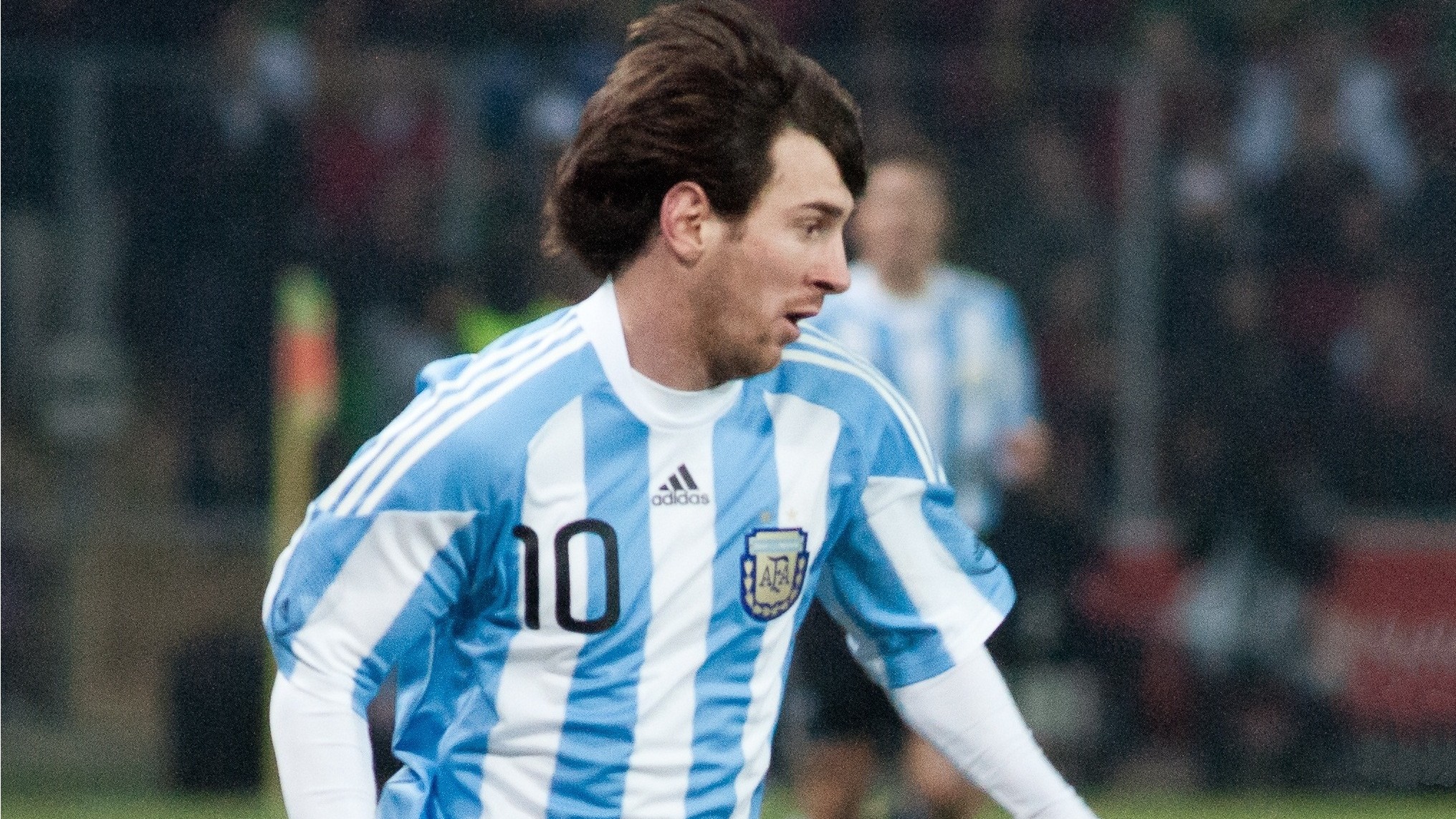
This is the match everyone will be watching. Lionel Messi, 38 years old (he turns 39 on June 24), begins his sixth World Cup. It is almost certainly his last. With 198 caps and 116 goals, the Inter Miami forward arrives not as a man chasing anything, but as a defending champion taking one final lap.
On the other side of the pitch: Riyad Mahrez, Algeria's captain, aged 35, also likely in his final tournament. Two ageing stars, two farewells, one opening group match.
For once, the model and the consensus agree. Our numbers: Argentina 69.9%, draw 22.0%, Algeria 8.1%. The market sits at roughly 71/20/11. The differences are small enough to call aligned.
The tactical matchup, though, is unusual. Algeria's profile is possession-dominant (68.4% possession, PPDA 11.1), which is actually more aggressive in pressing and ball retention than Argentina's own possession-dominant approach (59.4% possession, PPDA 19.1). Algeria will not sit back. Two teams wanting to control the ball creates a contest for territory that could produce an entertaining, open match.
One number to watch: Algeria's set-piece expected-goals share of 20.0% is the highest on today's card. If they are going to hurt Argentina, dead balls are the likeliest route. Their fitness situation matters too. Projected starting goalkeeper Anthony Mandrea (shoulder) and starting defender Ramy Bensebaini (ankle) are both doubtful. Argentina's only concern is depth forward Nicolás González.
Interestingly, the model gives Algeria slightly less chance than markets do (8.1% vs 11%), the opposite direction from every other divergence today.
Austria vs Jordan: the quiet contrarian call
The last match of the day carries the same pattern as France-Senegal and Iraq-Norway: the model is substantially lower on the favourite. Consensus has Austria around 67.8%. The model says 54.7%. Jordan: consensus 13.2%, model 20.6%.
Austria are at full strength and play a high-press system (PPDA 17.0, 53.1% possession). Their style is aggressive, direct (34.1 long balls per 90), and designed to win the ball high and attack quickly. On paper, that sounds dominant.
But Jordan's profile tells a different story. At 37.0% possession in qualifying (with partial tactical coverage), they are a team comfortable defending deep and absorbing pressure. That is precisely the kind of opponent that can frustrate a high-pressing side. If Austria cannot convert their territorial dominance into early goals, the match can tighten, and the counter-attacking window opens.
Jordan do face fitness concerns. Projected starting defender Ihsan Haddad and projected starting forward Ali Olwan are both doubtful. Even so, the model assigns Jordan a 20.6% win probability and a 24.7% draw probability, a combined non-Austria outcome of 45.3%. Consensus puts that closer to 32%. That is a meaningful gap.
The draws thesis, updated
Through 12 scored matches, the tournament draw rate is 33.3% (4 draws from 12). The model's average predicted draw probability across those matches was roughly 25%. Consensus was lower still. Reality keeps outrunning both.
Today's four matches continue the pattern. The model assigns higher draw probabilities than consensus in every single match: France-Senegal 27.2%, Iraq-Norway 24.5%, Austria-Jordan 24.7%, Argentina-Algeria 22.0%. All above 20%.
A brief calibration note: the model's Brier score through 12 matches is 0.659. In the 20-30% probability range, exactly where draw predictions cluster, observed frequency (30.8%) is close to what the model predicted (26.8%). The model's draw calibration is holding up. Whether the 33% tournament rate will regress toward 25% or stay elevated is the open question.
All probabilities are pre-match model outputs, locked before kickoff. The model publishes probabilities, not recommendations. Methodology: /docs/methodology/. Full Terms of Use.